
Every fall and spring, homeowners across Peoria climb onto ladders to clear leaves and debris out of their gutters — and every year, a percentage of them end up in the ER instead of finishing the job. Ladder falls aren’t a minor inconvenience. They’re one of the leading causes of home-related injuries for adults over 40, and gutter work is one of the most common reasons people end up on a ladder in the first place. If you’re planning DIY gutter cleaning in Peoria this season, the risk is higher than most people assume, and understanding why can save you a trip to the hospital.
Table of Contents
Why Gutter Cleaning in Peoria Carries More Risk Than People Expect
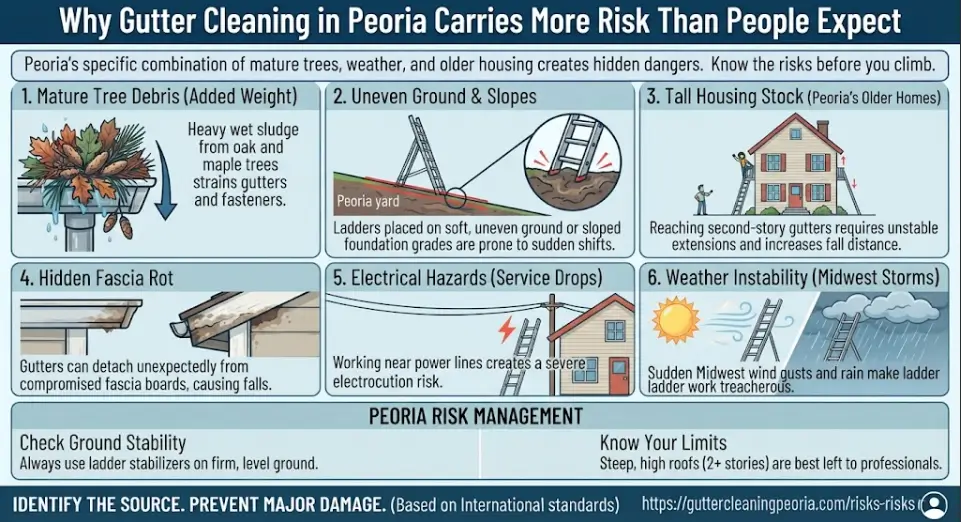
Peoria’s mix of mature tree cover, seasonal storms, and older two-story housing stock creates a specific combination of hazards. Wet leaves, oak debris, and compacted sludge add unexpected weight to gutter sections, and ladders set on uneven yards or sloped foundations shift more than homeowners realize until it’s too late.
Quick Answer: Ladder falls during gutter cleaning are more dangerous than most home tasks because they combine height, unstable footing, and awkward reaching — all at once. Most injuries happen not from falling off the top of the ladder, but from overreaching sideways to grab debris just out of arm’s reach, which shifts the ladder’s center of gravity without warning.
The Overreach Problem
The instinct to save time by not repositioning the ladder is the single biggest cause of falls during gutter work. Reaching more than an arm’s length to the side, rather than climbing down and moving the ladder, is responsible for a large share of ladder-related injuries nationally. On a typical Peoria two-story home, that’s a 15 to 20 foot drop onto concrete, pavers, or a foundation planting bed — not soft grass.
Wet and Debris-Loaded Gutters Change the Math
A dry gutter full of leaves is manageable. A wet one, soaked after a spring storm or holding a slush layer from an early winter freeze-thaw cycle, can weigh significantly more per linear foot. Homeowners pulling on a saturated clump don’t expect the sudden give when it releases, which throws their balance backward on the ladder rung.
Ladder Placement on Uneven Ground
Older Peoria neighborhoods often have foundations set slightly above grade, with mulch beds, downspout runoff channels, or sloped lawns right where a ladder needs to go. An extension ladder that looks stable on flat pavement can rock several degrees when one foot sits in a soft flower bed. That small tilt is enough to cause a slip, especially combined with a fully extended reach.
What Actually Reduces Ladder Risk During Gutter Work
If you’re set on doing gutter cleaning yourself, a few practices meaningfully cut the risk:
- Follow the three-point contact rule. Keep two hands and one foot, or two feet and one hand, in contact with the ladder at all times. Letting go with both hands to grab a handful of debris is where most falls start.
- Use a stabilizer bar or standoff. These attachments hold the ladder off the gutter edge itself, distributing weight across the roofline instead of resting directly on aluminum or vinyl that can bend or crack under load.
- Never set up on soft or sloped ground. Use ladder levelers on uneven yards, and avoid setting feet in mulch beds or near downspout trenches.
- Move the ladder instead of reaching. If you can’t touch the debris without leaning, climb down and reposition. It takes thirty extra seconds and eliminates the highest-risk motion in the entire task.
- Check for fascia board rot before loading weight on the gutter. A ladder resting against fascia weakened by water damage can give way even if the ladder itself is stable, dropping both the ladder and the person attached to it.
- Skip it entirely during or right after rain. Wet aluminum rungs and slick roof edges are a bad combination with an already unstable footing.
For a deeper look at proper ladder setup and load limits, the OSHA portable ladder safety guidelines outline the angle ratios and duty ratings that most homeowner ladders don’t meet, which is worth reviewing before your next climb.
When Professional Gutter Cleaning Is the Smarter Call
Beyond the injury risk, professional crews carry insurance, use commercial-grade stabilizers, and are trained to identify hazards like loose fascia, damaged hangers, or a downspout realignment issue before they become a bigger repair. If your home has steep rooflines, a second story, mature trees dropping heavy debris loads, or gutters you haven’t had inspected in a couple of years, the cost of a professional visit is almost always lower than an ER copay or a missed week of work from a bad fall.
Homeowners looking for dependable, insured gutter cleaning services in Peoria can skip the ladder risk altogether and get a same-visit inspection for related issues like seamless gutter separation, sagging sections, or early signs of water damage along the fascia.
Local Factors That Make Peoria Gutters Riskier to Clean Solo
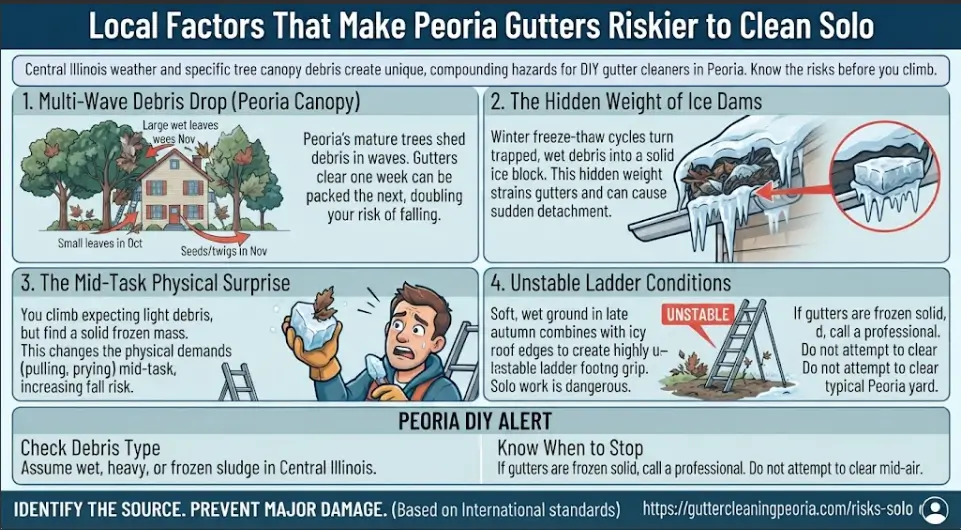
Peoria’s tree canopy — heavy on oak, maple, and cottonwood — sheds debris in waves rather than all at once, meaning gutters that looked clear in October can be packed again by late November. Combine that with freeze-thaw cycles common to central Illinois winters, and clogged sections can ice over, adding hidden weight that isn’t visible from the ground. Homeowners who climb up expecting a light debris clear-out sometimes find a solid, frozen mass instead, which changes the physical demands of the job mid-task.
FAQs
How often should gutters be cleaned in Peoria?
Most homes benefit from two cleanings a year — once in late spring after seed and bud debris settles, and once in late fall after leaf drop. Homes with heavy tree cover nearby may need a mid-season check as well.
Is it safe to clean gutters alone?
It’s not recommended. Having a second person hold the ladder base or spot from the ground significantly reduces fall risk, since they can catch early signs of ladder shift before it becomes a fall.
What’s the biggest mistake homeowners make on a ladder during gutter cleaning?
Overreaching sideways instead of repositioning the ladder. It’s the single most common cause of falls during this specific task.
Can clogged gutters cause damage beyond just overflow?
Yes. Standing water backs up under shingles and fascia boards, accelerating fascia board rot, and can lead to foundation water damage when downspouts can’t direct water away from the home properly.
Do gutter guards eliminate the need for cleaning?
No. Gutter guards reduce buildup but don’t stop it completely — fine debris, seed pods, and shingle grit still accumulate underneath most guard systems over time and need periodic clearing.
What should I do if I notice sagging or pulling-away gutter sections?
Stop climbing on or near that section immediately. Sagging usually means the hangers have failed or the fascia board is compromised, and added weight from a person or ladder can cause a partial collapse.
Is professional gutter cleaning worth it for a single-story home?
Even single-story homes carry fall risk, particularly on sloped lots or with roof pitches that make ladder angles awkward. It’s a lower-risk job than two-story homes, but not risk-free.