
By the Gutter Cleaning Peoria team · Updated November 25, 2026
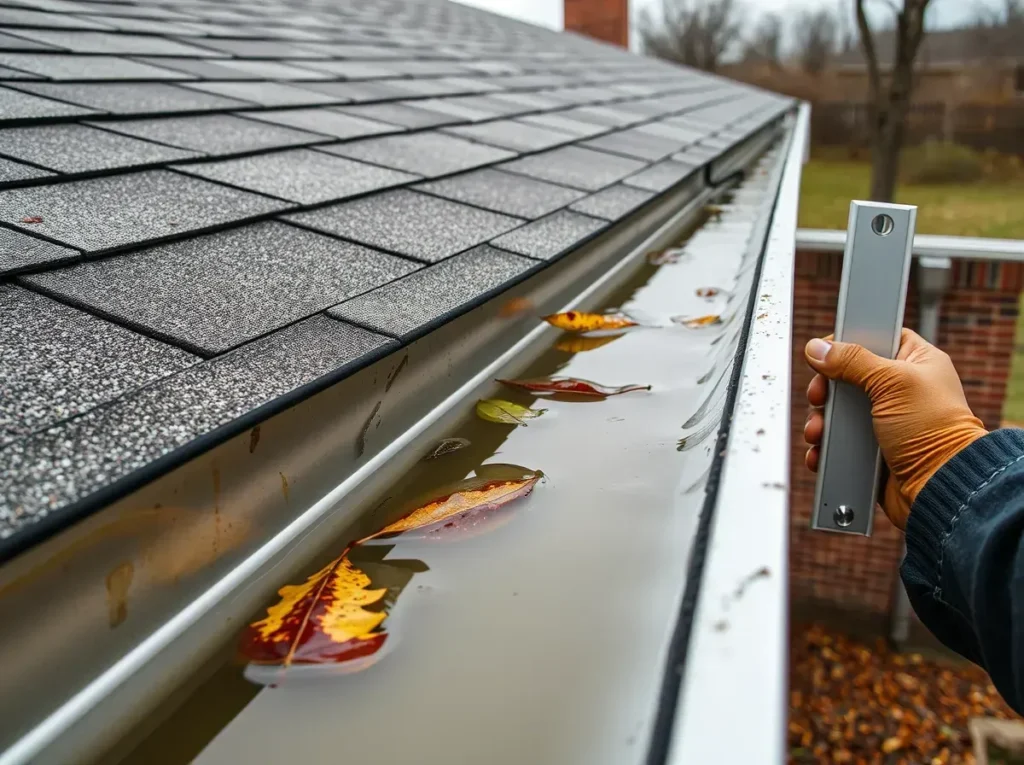
Short answer: Gutters should drain within an hour or two after the rain stops. Standing water for days means one of three things: a clog at the outlet or in the downspout, a section that sags between hangers, or a gutter that was hung with too little slope. Clear the outlet first. If water still sits, check the pitch with a level and tighten or add hangers.
Late fall is the worst time to ignore it in central Illinois. Oak and maple leaves pack the outlets, and the first hard freeze can lock that water in place for weeks. A local Peoria gutter cleaning service can clear, flush and level the run in one visit.
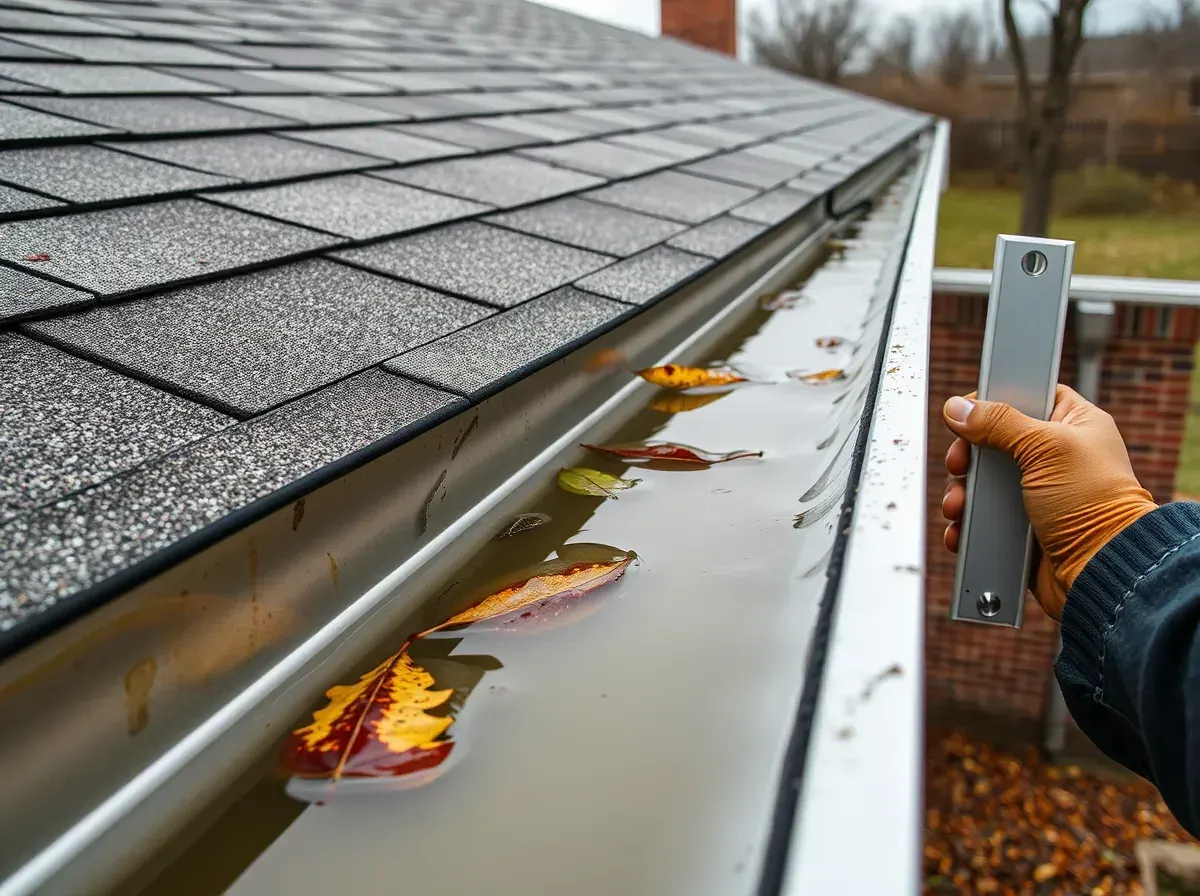
What causes standing water in gutters?
Six problems cause almost every case. The table shows how to spot each one from the ground or a ladder.
| Cause | What you notice | Fix |
|---|---|---|
| Clogged outlet | Water deepest right at the downspout | Clear the outlet and flush |
| Clogged downspout or elbow | Gutter full, little water at the bottom | Flush or take apart the elbows |
| Sagging section | A puddle in one low spot mid-run | Tighten or add hangers |
| Wrong pitch | Water spread along the whole run | Re-hang with proper slope |
| Too few downspouts | Long runs hold water at the far end | Add a downspout |
| Shingle grit and debris | Sludge layer on the gutter floor | Clean and flush the run |
How do you find out why water is sitting?
Pick a dry day, set your ladder on firm ground, and work through these checks in order:
- Look at where the water sits. Water deepest near the downspout points to a clog. A single puddle in the middle points to a sag. Water spread evenly along the run points to poor pitch.
- Clear the outlet. Scoop leaves and sludge out of the downspout opening and a few feet each way.
- Flush with a hose. Run water at the far end. Watch whether it flows steadily toward the outlet and comes out the bottom of the downspout.
- Check the downspout. If water backs up, tap the downspout to find the clog, then flush from the bottom or remove the lower elbow.
- Use a level. Hold a 2-foot level on the gutter lip. You want a slight fall toward the downspout, roughly a quarter inch per 10 feet.
If the downspout runs clear but water still sits in one spot, the gutter itself is the problem, not a clog.
Why do gutters lose their slope?
Most gutters are pitched correctly when installed, then lose that slope over the years. Spike-and-ferrule fasteners work loose as wood expands and shrinks. Heavy wet leaves, ice and snow push sections down. Ladders leaned against the gutter bend the lip. Rotting fascia boards let hangers pull out.
Once one section drops, water collects there, adds weight and makes the sag worse. Our guide to sagging gutters in Peoria explains how hidden hangers fix this better than old spikes.
What damage can standing water cause?
Standing water looks harmless, but it wears a house down over time:
- Rotted fascia and soffit. Water wicks into the wood behind the gutter. See our post on fascia board rot behind gutters.
- Rusted seams and leaks. Steel gutters rust and sealant fails where water sits.
- Mosquitoes in summer. A few days of still water is enough for larvae.
- Ice and weight in winter. Frozen water can pull the run off the house.
- Overflow at the low spot. Heavy rain spills over right where the gutter sags, which our guide to gutters overflowing in Peoria covers.
Should you fix it before the first freeze?
Yes, if you can. Peoria usually sees its first hard freezes from late November into December. Water left in a gutter freezes from the top down and can stay frozen for weeks. That ice adds weight to hangers that are already loose, and it gives meltwater from the roof nowhere to go. That is how ice dams start at the eaves.
Clearing outlets and fixing low spots in late fall is the easiest way to avoid that. Our guide to winter gutter care and ice dams lists the other steps to take before the cold settles in.
How do you fix a gutter with bad pitch?
Fixing pitch means re-hanging part or all of the run. A pro will usually:
- Snap a chalk line along the fascia with the correct fall to the outlet.
- Remove old spikes or loose hangers.
- Re-set the gutter to the line and fasten it with hidden hangers and screws about every 2 feet.
- Reseal the end caps and outlet if the run was moved.
- Flush the run with a hose to confirm it drains fully.
On long runs, adding a second downspout can solve the problem better than more slope. Very low slopes on long runs can also look odd from the street, so splitting the run is often the cleaner fix.
When should you call for help?
Call a pro when the problem is on a second-story roof, when the fascia is soft, when hangers keep pulling out, or when you have flushed the downspout and water still sits. Our gutter repair in Peoria service covers re-pitching, hanger replacement and resealing seams.
If the clog is deep inside a downspout or its underground line, read our guide to a clogged downspout in Peoria first. Once the gutter drains the way it should, a yearly cleaning after the leaves fall is usually enough to keep water from sitting again.
Frequently asked questions
Is it normal to have some water in gutters after rain?
A thin film or a few small puddles for an hour or two after rain is normal. Water that sits more than a day, or puddles deeper than about a quarter inch, means the gutter is not draining. Over time that standing water rusts seams, rots the fascia and breeds mosquitoes.
What is the correct slope for a gutter?
Most gutters should fall about a quarter inch for every 10 feet of run toward the downspout. Long runs over 35 to 40 feet often slope both ways from the middle to two downspouts. Too little slope leaves water sitting, while too much can make water shoot past the outlet in heavy storms.
Can standing water in gutters freeze and cause damage?
Yes. In Peoria winters, water left in a gutter can freeze solid, add a lot of weight, pull hangers loose and help ice dams form at the roof edge. Draining and fixing a gutter before the first hard freeze prevents most of that damage.
Will gutter guards stop standing water?
No. Guards keep leaves out, which helps the gutter drain, but they do not fix a gutter that is pitched wrong or sagging. If water sits under a guard, the gutter itself needs to be re-hung or adjusted.
Should I fix standing water myself or call a pro?
Clearing a clogged outlet from a single-story ladder is a reasonable DIY job. Re-pitching a gutter, replacing hangers or working on a two-story roof is safer for a pro with the right ladder setup and fasteners.
Water still sitting in your gutters? Call Gutter Cleaning Peoria at (309) 321-9089. We clean, flush and re-pitch gutters across Peoria, Peoria Heights, East Peoria, Dunlap and Bartonville, and we tell you what we find before we fix anything.