
By the Gutter Cleaning Peoria team · Updated November 24, 2026
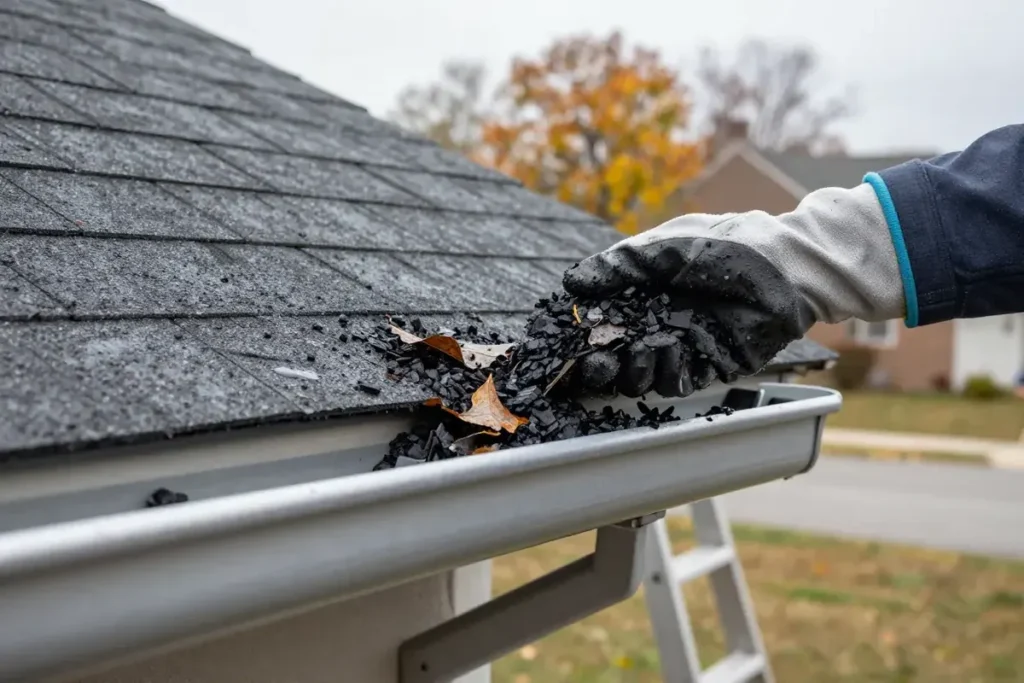
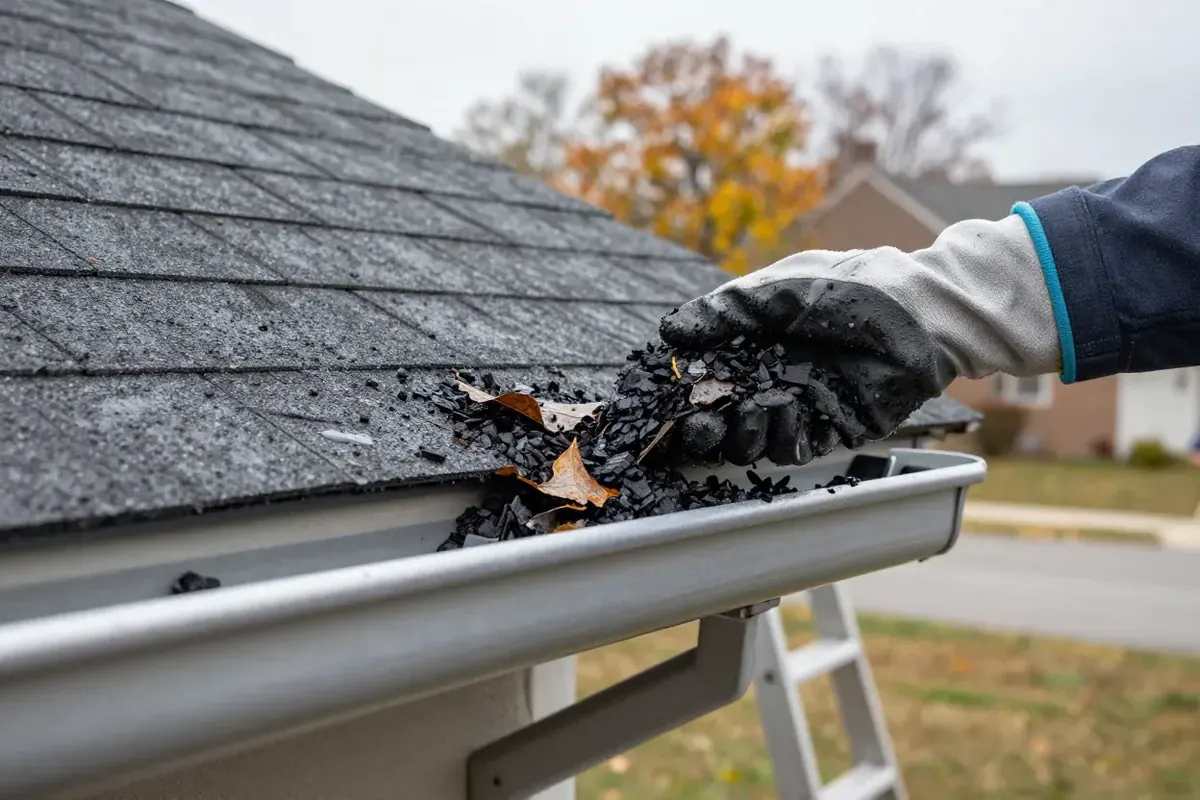
Short answer: The black or gray sand in your gutters is almost always shingle granules, the small mineral chips that coat asphalt shingles. A little is normal, and a new roof sheds extra for the first year. A lot, especially after a storm or on a roof older than about 15 years, can mean hail damage or a roof near the end of its life. Clean it out, note how much there is, and have the roof checked if it keeps growing.
Peoria gets a mix of spring hail, heavy summer storms and freeze-thaw winters, all of which wear on shingles. A gutter cleaning company in Peoria that scoops granules out by hand sees the trend every season, which makes the gutters a handy early warning for your roof.
What are shingle granules?
Asphalt shingles are made of a mat soaked in asphalt, topped with a layer of crushed mineral granules. Those granules block sunlight, which would otherwise dry out and crack the asphalt. They also give the roof its color and some fire resistance. Rain and wind slowly wash them off over the years, and they end up in your gutters.
How much is normal?
The amount matters more than seeing any granules at all. Here is a simple guide.
| What you find | What it usually means | Next step |
|---|---|---|
| A light dusting on a new roof (first year) | Loose extra granules from the factory | Normal; keep gutters clean |
| A small handful per section on a 10 to 15 year old roof | Normal aging | Watch for changes each cleaning |
| A big jump after one storm | Possible hail damage | Check gutters and vents for dents; roof inspection |
| Thick layers plus bare spots on shingles | Roof wearing out | Get a roof assessment |
| Granules piling at downspouts and drains | Grit settling in the drainage path | Flush downspouts and underground lines |
What are the warning signs of roof wear?
When you or your gutter cleaner sees granules, look for these five signs too:
- Bare or shiny black patches on shingles where the asphalt shows through.
- Curling or cupped edges on shingles, often on the sunny south and west sides.
- Dark, round bruises or dents in gutters, vents and downspouts after a hailstorm.
- Granules in the roof valleys, where water runs fastest. Our guide to roof valleys and gutters explains why valleys wear first.
- Water stains on the attic decking or ceiling below the eaves.
Do not walk on the roof to look. Use binoculars from the ground, or let a pro check from a ladder at the gutter line.
Why do granules cause gutter problems?
Granules are heavier than leaves, so they sink to the bottom of the gutter. Mixed with oak and maple leaves, helicopter seeds and pine needles, they turn into a dense, wet sludge that holds water against the metal. That weight can make gutters sag, and the standing water can rust steel gutters and stain fascia boards.
Granules also travel. They pile up at downspout elbows and settle in underground drain lines, where they act like sand in a pipe. Over time, water backs up and spills over the gutter edge near the downspout, often right by the foundation.
How should you clean granules out of gutters?
Clean granules out with the leaves, not just the top layer of debris:
- Scoop the gutter bottom by hand or with a gutter scoop, down to bare metal.
- Flush each downspout with a hose and check that water flows freely at the outlet.
- Look inside downspout elbows, where grit packs tight.
- Note how much grit came out of each section, so you can compare next season.
Pressure washing a shingle roof can strip granules faster, so skip it. If moss or dark streaks are the issue, a soft-wash method is safer. Our roof cleaning in Peoria, IL service uses low-pressure cleaning, and our post on roof and gutter cleaning together covers when it makes sense to book both.
Do gutter guards stop granules?
Most gutter guards keep leaves out, but fine granules can pass through many screens and settle in the gutter anyway. Micro-mesh guards catch more of them. Even with guards, gutters need an occasional flush to clear grit. Think of guards as a way to clean less often, not to never clean at all.
Repair, replace or wait?
Granules in your gutters do not mean you need a new roof right away. They are a clue. If the gutters themselves are bent, pulling away or rusting from years of wet sludge, our guide on gutter lifespan, repair vs replace helps you decide what to fix. If a roofer finds hail damage or worn shingles, plan the roof work first, then rehang or replace gutters at the same time so you only pay for one setup.
Frequently asked questions
Is it normal to find shingle granules in gutters?
A small amount is normal, especially in the first year after a new roof, when loose extra granules wash off. A steady handful after every storm on an older roof, or bare black patches on the shingles, is a sign of wear that should be checked.
Can shingle granules clog gutters and downspouts?
Yes. Granules are heavy and settle at the bottom of the gutter, where they mix with leaves and seed pods into a dense sludge. They also collect at downspout elbows and in underground drain lines, which slows drainage and can cause overflow.
Does hail cause granule loss?
Hail can knock granules loose and leave dark, round bruises on shingles. If you see a sudden jump in granules after a storm, along with dents on gutters, vents or downspouts, have the roof looked at and talk with your insurance agent about next steps.
What do granules do on a shingle roof?
Granules protect the asphalt layer from sunlight, add fire resistance and give the roof its color. When enough of them wash away, the asphalt dries out and cracks faster, which shortens the life of the roof.
Should I clean granules out of my gutters?
Yes. Scoop them out with the leaves and flush the downspouts so the grit doesn’t build up. Note how much you remove each time, since a growing amount is a useful clue about your roof’s condition.
Gutters full of grit and leaves? Call Gutter Cleaning Peoria at (309) 321-9089. We clean gutters and downspouts across Peoria, Peoria Heights, East Peoria, Dunlap and Pekin, and we tell you what we see on the roof edge while we are up there.