
By the Gutter Cleaning Peoria team · Updated November 16, 2026
Short answer: Water runs behind gutters when it can reach the gap between the gutter and the fascia board. The usual causes are a missing or short drip edge, a gutter hung too low or tilted the wrong way, clogs that push water over the back edge, leaking seams, and ice dams in winter. Most fixes are simple, but the longer water gets behind the gutter, the more fascia and roof deck rot it causes. Call (309) 321-9089 if you see stains or drips.
In Peoria, Peoria Heights, East Peoria and the bluff neighborhoods, heavy spring storms, fall leaves from oaks and maples, and winter freeze-thaw cycles all put gutters to the test. Water behind the gutter is easy to miss from the ground, so this guide covers how to spot it, why it happens and what the fix looks like.
How can you tell water is getting behind the gutter?
Look for dark streaks or peeling paint on the fascia board behind the gutter, drips falling between the gutter and the house during rain, stains on the siding or soffit below the gutter, and soft or rotted wood at the roof edge. Loose gutter hangers and a gutter pulling away from the house are later signs.
- Water dripping in a line behind the gutter, not over the front.
- Wet or stained soffit vents and peeling paint near the roof edge.
- Moss or algae on the fascia board.
- Muddy splash marks along the foundation right below the gutter.
- Water stains on the attic side of the roof edge.
What are the 6 most common causes?
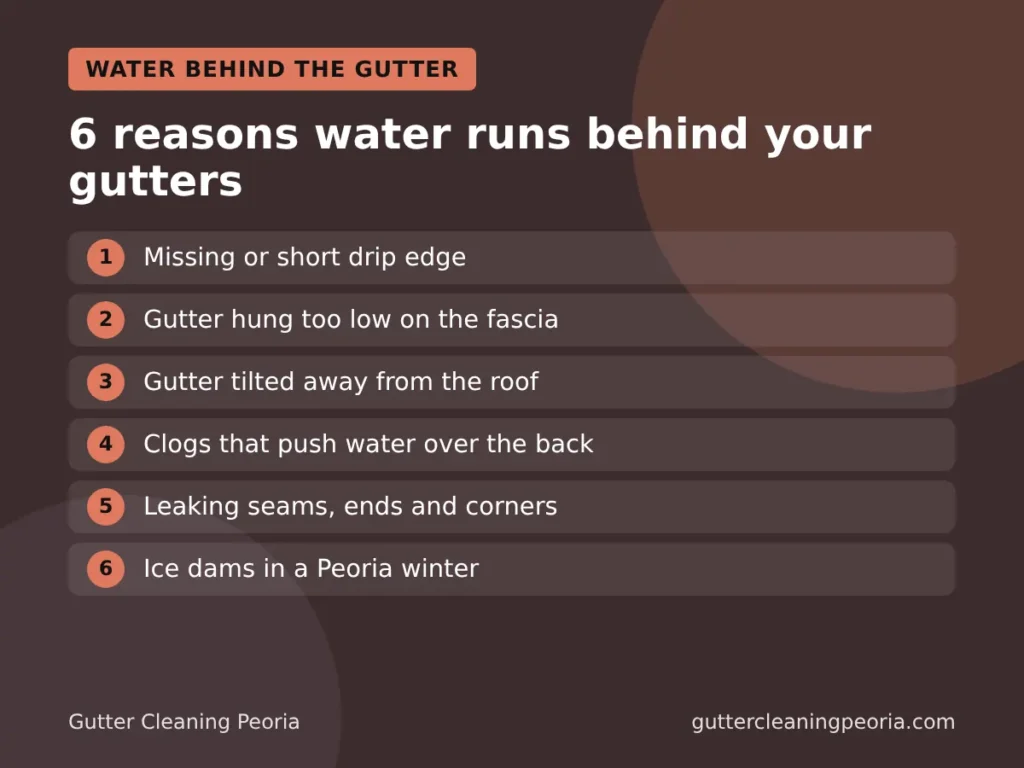
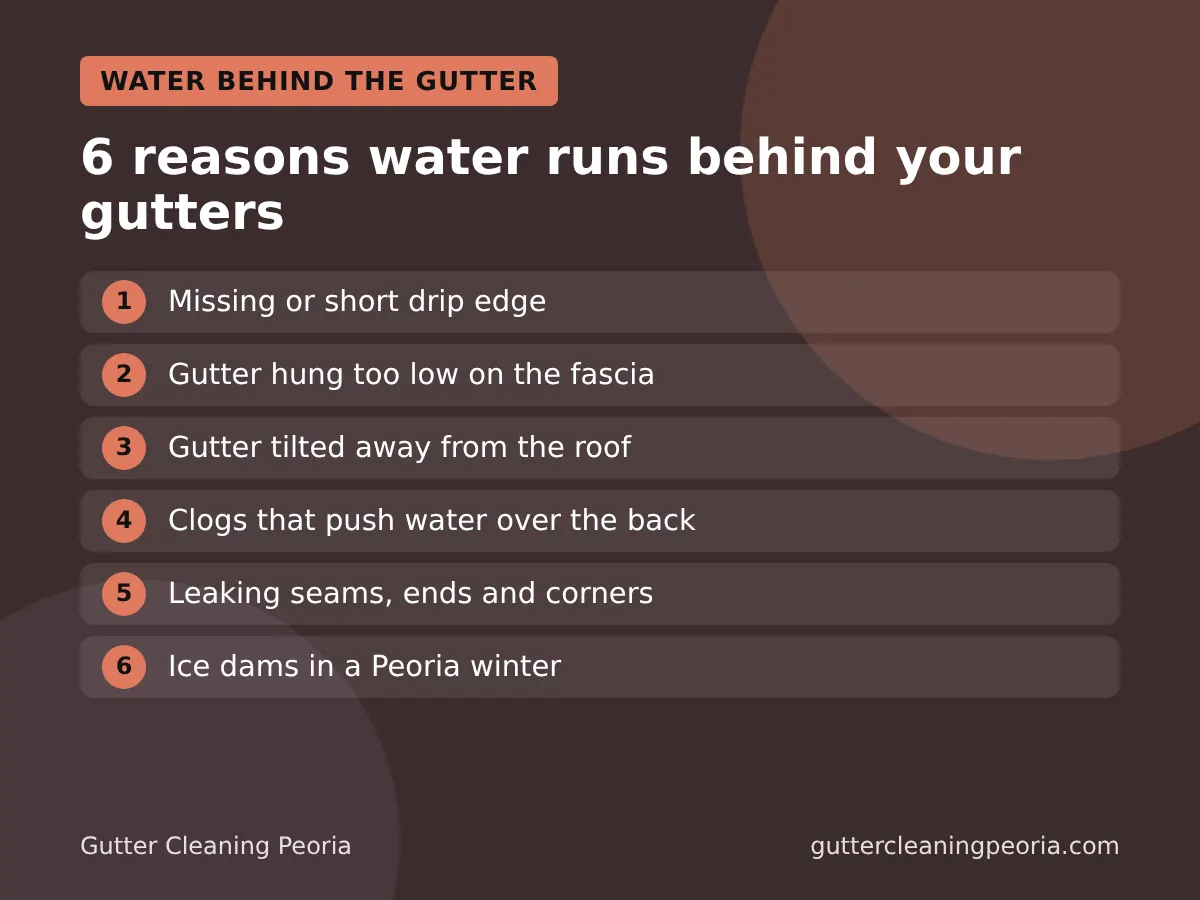
The six usual causes are a missing or short drip edge, a gutter hung too low on the fascia, a gutter tilted away from the roof, clogged gutters that overflow over the back, leaking seams, end caps and corners, and ice dams in winter. Often two causes work together, such as a short drip edge and a gutter that sits too low.
| Cause | What you see | Usual fix |
|---|---|---|
| 1. Missing or short drip edge | Steady drip behind the gutter in every rain | Add a drip edge or gutter apron under the shingles |
| 2. Gutter hung too low | Gap between the shingles and the back of the gutter | Rehang the gutter higher on the fascia |
| 3. Gutter tilted away from the house | Back edge lower than the front | Reset hangers so the back sits higher |
| 4. Clogs | Water spills over both edges, plants in the gutter | Clean gutters and flush downspouts |
| 5. Leaking seams and corners | Drips at one spot, often a corner or joint | Reseal or replace the section |
| 6. Ice dams | Icicles and ice ridge at the roof edge in winter | Improve attic insulation and ventilation, keep gutters clear |
Why does a missing drip edge cause so many problems?
Water clings to the underside of shingles and can curl back toward the house before it falls. Without a drip edge, that water runs straight down the fascia and behind the gutter. A drip edge or gutter apron sticks out past the fascia and over the back of the gutter, so the water drops into the trough instead of onto the wood.
Many homes built before modern codes, and some re-roofs where the old drip edge was not replaced, are missing it. On homes with a drip edge that is too short, a gutter apron can be slid under the shingles to extend it. This is one of the simplest and most effective fixes.
How should a gutter be hung?
The back of the gutter should sit tight to the fascia and just below the drip edge, so the drip edge overlaps into the trough. The gutter should slope gently toward each downspout, about a quarter inch for every 10 feet, and the front edge should sit slightly lower than the back so any overflow goes out the front, away from the house.
Gutters that sag between hangers, pull away from the fascia or slope the wrong way need their hangers reset. Our guide to sagging gutters in Peoria explains how hidden hangers are spaced. If rotted fascia has let screws pull loose, the wood must be replaced before the gutter is rehung. Our gutter repair in Peoria covers rehanging, resealing and fascia problems.
Can clogs push water behind the gutter?
Yes. When leaves, seed pods and shingle grit fill the gutter, water rises until it spills over. If the gutter is level or tilted back, it spills over the back edge first, right onto the fascia. Clogged downspouts make it worse because the whole run fills up during a storm.
Fall in Central Illinois brings heavy leaf drop from oaks, maples and sycamores, and many Peoria homes need a late-fall cleaning after the last leaves are down. See our guide to gutters overflowing in Peoria for more on clogs and downspouts.
How do ice dams send water behind gutters?
Ice dams form when heat from the attic melts snow on the roof, and the water refreezes at the cold roof edge. A ridge of ice builds up in and above the gutter, and melting water backs up behind it, under shingles and down behind the gutter. Peoria’s winters bring many freeze and thaw cycles, which makes ice dams common.
Clear gutters before winter so meltwater has somewhere to go, and have the attic checked for missing insulation and blocked vents. Our post on winter gutter care and ice dams covers prevention in more detail. Never chip ice off a roof edge with a hammer or ladder in icy conditions.
What damage does water behind gutters cause?
Left alone, water behind gutters rots the fascia board and the edge of the roof deck, loosens gutter hangers, peels paint, stains siding and soffits, and soaks the soil along the foundation. In Peoria homes with basements, that extra water at the foundation is a common source of damp walls and leaks after heavy rain.
When should you call a gutter pro?
Call when you see rotted or soft fascia, gutters pulling away from the house, drips behind the gutter that continue after a cleaning, or when the work is on a two-story home or a steep roof. A pro can check the drip edge, the gutter height and pitch, and every seam in one visit, and fix the real cause instead of just the symptom.
We clean and repair gutters across Peoria, Peoria Heights, East Peoria, Dunlap, Bartonville, Bellevue and Pekin. Call (309) 321-9089 for a clear quote before any work starts.
Frequently asked questions
Why is water coming from behind my gutters?
The most common cause is a missing or short drip edge, which lets roof water run down the fascia board behind the gutter. Other causes are a gutter hung too low, a gutter tilted away from the house, clogs that push water over the back edge, leaking seams and ice dams in winter.
What is a drip edge and do I need one?
A drip edge is a bent metal strip installed under the bottom row of shingles. It sends water off the roof edge and into the gutter instead of letting it curl back onto the fascia. Most roofs in Peoria have one, but some older homes do not, or it is too short to reach over the back of the gutter.
Can water behind gutters damage my house?
Yes. Water running behind gutters soaks the fascia and roof deck, causing rot, peeling paint and loose gutter hangers. It can also stain siding, wet the soffit and attic edge, and pour down along the foundation, where it can lead to basement leaks.
Can I fix water behind gutters myself?
You can clean clogged gutters from a safe ladder, and gutter apron strips can slide under shingles on a one-story home. Rehanging gutters, replacing rotted fascia and work on two-story homes or steep roofs are best left to a pro.
Do gutter guards stop water from running behind gutters?
Not by themselves. Guards keep debris out, which stops clogs from pushing water over the back. But if the drip edge is missing or the gutter is set too low, water will still run behind the gutter with a guard on top.
Water still dripping behind the gutters after a rain? Call Gutter Cleaning Peoria at (309) 321-9089. We clean, check and repair gutters across the Peoria area and give you a clear quote before any work starts.