
If you’re planning to list your house anytime soon, your gutters are probably the last thing on your mind. They shouldn’t be. Buyers, agents, and home inspectors all check the roofline before they check anything else, and clogged or sagging gutters send an immediate signal that a home hasn’t been maintained. Regular gutter cleaning in Peoria is one of the cheapest ways to protect your sale price, because it stops water damage before it turns into the kind of repair that shows up on an inspection report and scares off a buyer.
Table of Contents
Quick Answer: Do Clean Gutters Really Affect Resale Value?
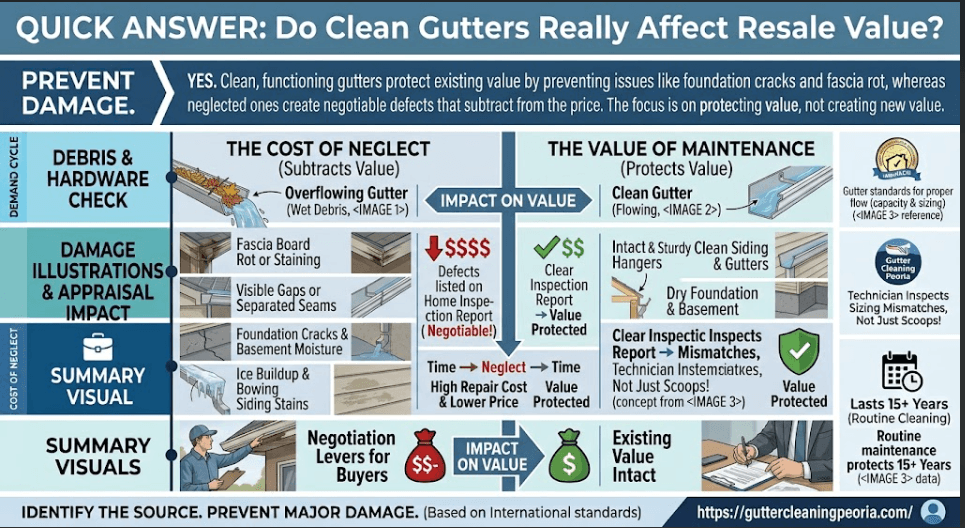
Yes. Clean, properly functioning gutters don’t add dramatic dollar value on their own, but neglected ones actively subtract from it. Overflowing gutters cause fascia rot, foundation cracks, siding stains, and basement moisture — all issues that appraisers and inspectors document, and all issues buyers use to negotiate the price down or walk away entirely. Keeping gutters clear protects the value that’s already built into your home instead of creating new value from scratch.
Why Home Inspectors Flag Neglected Gutters
Gutters and downspouts are a required checkpoint in a standard home inspection, not an optional glance. According to InterNACHI’s Home Inspection Standards of Practice, home inspectors are required to inspect the gutters and downspouts as part of the roof portion of the home inspection. Inspectors are specifically looking for rust, cracks, sagging sections, and whether downspouts divert water 4 to 6 feet away from the home’s foundation.
When an inspector notes “evidence of moisture intrusion” or “downspout discharge too close to foundation,” that line item becomes a bargaining chip for the buyer’s agent. A $150 cleaning and downspout realignment now is a lot cheaper than a credit negotiated off your closing price later.
The Hidden Damage Clogged Gutters Cause Before a Sale
Water doesn’t wait for a good time to find a weak point. When gutters back up, the overflow runs down exactly where you don’t want it:
- Fascia board rot — constant overflow soaks the wood board behind the gutter, leading to soft, discolored trim that’s visible from the street.
- Foundation cracks — pooled water at the base of the house saturates soil and puts pressure on the foundation wall, sometimes leading to hairline cracks that show up on inspection photos.
- Siding stains and streaking — mineral deposits and dirt from overflow leave dark streaks that buyers notice on a walkthrough even if they don’t know the cause.
- Basement or crawlspace moisture — water pushed against the foundation finds its way in through the smallest gap, creating musty odors that kill a buyer’s first impression fast.
- Soffit and attic damage — ice buildup from clogged winter gutters can back up under the roofline and soak insulation.
Each of these starts as a minor maintenance item and ends as a line item a buyer’s inspector puts in bold text.
Curb Appeal and Buyer Psychology in Peoria’s Market
Buyers decide how they feel about a house before they walk through the front door. Realtor surveys back this up directly: 92% of REALTORS® suggest that sellers improve the curb appeal of their home before listing it for sale, and 97% of NAR members believe curb appeal is important in attracting a buyer. Sagging, debris-filled gutters are one of the first flaws a buyer’s eye catches from the driveway, right alongside peeling paint and an overgrown lawn.
In Peoria neighborhoods with mature tree cover — think West Bluff, Grandview Drive, and the older sections near Bradley Park — gutters fill up fast every fall, and homes with visibly clean rooflines simply photograph and show better than ones with a hedge of leaves hanging off the eaves.
Peoria’s Climate Makes Gutter Neglect Worse
Central Illinois weather is not gentle on gutter systems. Peoria gets heavy leaf drop from oak and maple trees every autumn, followed by a freeze-thaw cycle all winter that turns any trapped water into ice. That ice adds weight, pulls fasteners loose from the fascia, and can force meltwater back under the roof edge instead of down the downspout. Homes selling in late fall or winter are especially exposed, since a gutter that looked fine in September can be sagging or ice-damaged by the time a buyer tours the property in January.
This is also why downspout realignment matters more here than in milder climates — a downspout that dumped water safely away from the foundation in summer can shift after a hard freeze and start discharging straight against the foundation wall instead.
Gutter Cleaning in Peoria: A Simple Pre-Listing Checklist
Before your first showing, walk the exterior with this list:
- Clear all gutters and valleys of leaves, seed pods, and shingle grit.
- Check for sagging sections or gutters pulling away from the fascia.
- Inspect downspouts to confirm they discharge water at least 4–6 feet from the foundation.
- Look for splash-back staining on siding directly under gutter seams — a sign of an existing leak.
- Check fascia boards for soft spots, discoloration, or peeling paint.
- Confirm seamless gutters (if installed) still have tight, sealed joints at the corners and outlets.
Working through this list yourself catches the obvious problems, but anything involving ladder work on a two-story roofline is worth handing to a crew that does it daily. If you’d rather not spend a Saturday on a ladder before a showing, a professional gutter cleaning service in Peoria can knock out the entire checklist in under an hour.
How Often Should Peoria Homeowners Clean Gutters Before Selling?
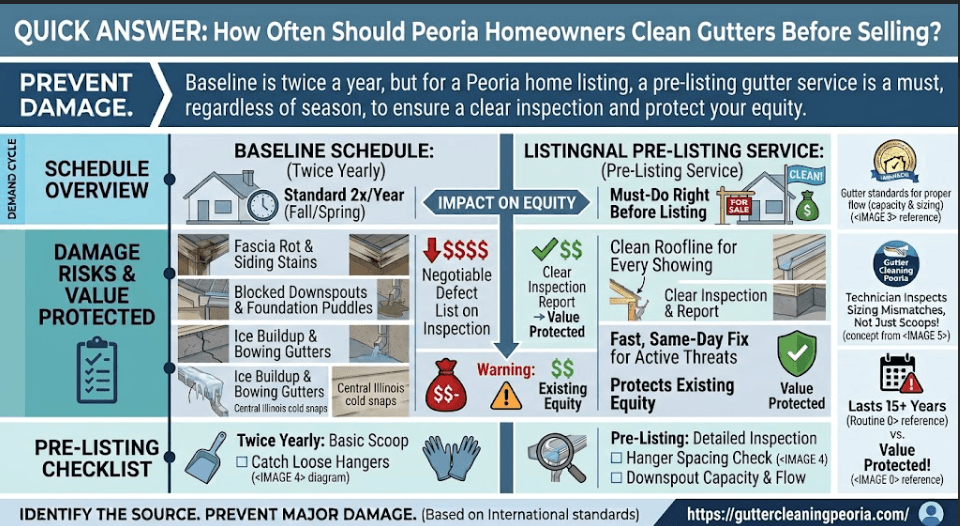
InterNACHI’s general guidance is to clean gutters twice a year, and that’s a reasonable baseline for most Peoria homes. If your property has heavy tree cover, plan on a fall cleaning after leaf drop and a spring check after the last hard freeze — and add a third cleaning right before you list, regardless of season, so the roofline looks its best for every showing and for the inspection.
If you’re within a few weeks of listing, don’t wait for the “twice a year” schedule to line up. A pre-listing gutter service is one of the highest-value, lowest-cost items you can check off before the sign goes in the yard.
Get Your Gutters Ready Before You List
A clogged gutter system is an easy, inexpensive fix that protects thousands of dollars in resale value by preventing fascia rot, foundation issues, and moisture damage before a buyer or inspector ever sees them. Gutter Cleaning Peoria handles pre-listing gutter service for homeowners across the greater Peoria community who want their property showing-ready and inspection-ready at the same time. Click here to schedule a free estimate before your next open house, or visit https://guttercleaningpeoria.com directly for current availability.
FAQs
Does cleaning gutters actually increase my home’s sale price?
Clean gutters don’t add a specific dollar figure to your appraisal, but they prevent the fascia rot, foundation cracking, and siding stains that do lower an appraised value or give a buyer’s agent leverage to negotiate a lower price.
Will a home inspector fail a house for dirty gutters?
Inspectors don’t “fail” a home, but they document conditions. Overflowing gutters, sagging sections, and downspouts discharging too close to the foundation all get written up as items needing correction, which buyers often use to request a credit or repair.
How much does gutter cleaning in Peoria typically cost before a home sale?
Pricing depends on the home’s size, number of stories, and gutter condition, but a standard single-family cleaning is a small fraction of what a foundation or fascia repair would cost if the water damage is allowed to progress.
What’s the best time of year to clean gutters before selling in Peoria?
Late fall after leaf drop and early spring after the last freeze are the two ideal windows. If you’re listing outside those times, schedule a cleaning within a week or two of your first showing regardless of season.
Do seamless gutters need less maintenance before a sale?
Seamless gutters have fewer leak points than sectional gutters, but they still need debris cleared and downspouts checked. “Seamless” refers to the lack of seams along the length of the gutter, not immunity from clogging.
Is downspout realignment something I should check before listing?
Yes. Freeze-thaw cycles and settling soil can shift downspout extensions over time, sending water back toward the foundation instead of away from it. This is a quick check worth doing right before your first showing.