
Gutter cleaning Peoria homeowners rely on is more effective when it is combined with proper roof maintenance. Roofs shed leaves, pine needles, shingle granules, moss, and other debris that eventually enters the gutter system. When this debris builds up, it can clog gutters, restrict downspouts, and increase the risk of water damage around the fascia, roof edge, and foundation. Understanding how roof cleaning and gutter cleaning work together can help Peoria homeowners maintain better drainage and avoid preventable repairs.
Table of Contents
Quick Answer: Do You Need Roof Cleaning and Gutter Cleaning Together?
Yes. Roof debris — leaves, pine needles, shingle granules, and moss — is the primary source of gutter clogs. Cleaning gutters without addressing what’s shedding off the roof means they’ll re-clog within a season. In Peoria, where oak and maple canopy cover is heavy in older neighborhoods, most homes benefit from a combined service at least once in spring and once in fall, with a mid-season check after major storms.
Why Peoria Roofs and Gutters Are a Package Deal
Every roof sheds something. Asphalt shingles lose granules as they age, trees drop leaves and seed pods, and wind carries debris from neighboring lots. All of that material has one exit route: down the slope and into the gutter system. A roof that’s never cleaned sends a steady stream of grit and organic debris into gutters that were just cleaned out — undoing the work almost immediately.
This is why professional gutter cleaning in Peoria typically includes a visual roof debris check, and why homeowners who treat the two services as one system get longer-lasting results than those who only address the gutters.
What Happens When Roof Debris Isn’t Managed
Left unchecked, this cycle creates several problems that compound over a Central Illinois winter:
- Moss and algae growth: Shaded, north-facing roof sections trap moisture under leaf litter, encouraging moss that lifts shingle edges and holds water against the roof deck.
- Granule loss acceleration: Trapped debris holds moisture on shingles longer, speeding up granule wear and shortening roof lifespan.
- Downspout realignment issues: Heavy, wet debris settles at bends and elbows, misaligning downspouts and forcing water to shoot out sideways instead of away from the foundation.
- Fascia board rot: Standing water in clogged gutters sits against the fascia board for weeks, softening wood and inviting carpenter ants.
- Ice dam formation: In Peoria winters, debris-clogged gutters trap meltwater, which refreezes at the roof edge and pushes moisture back under shingles.
How Roof and Gutter Cleaning Complement Each Other
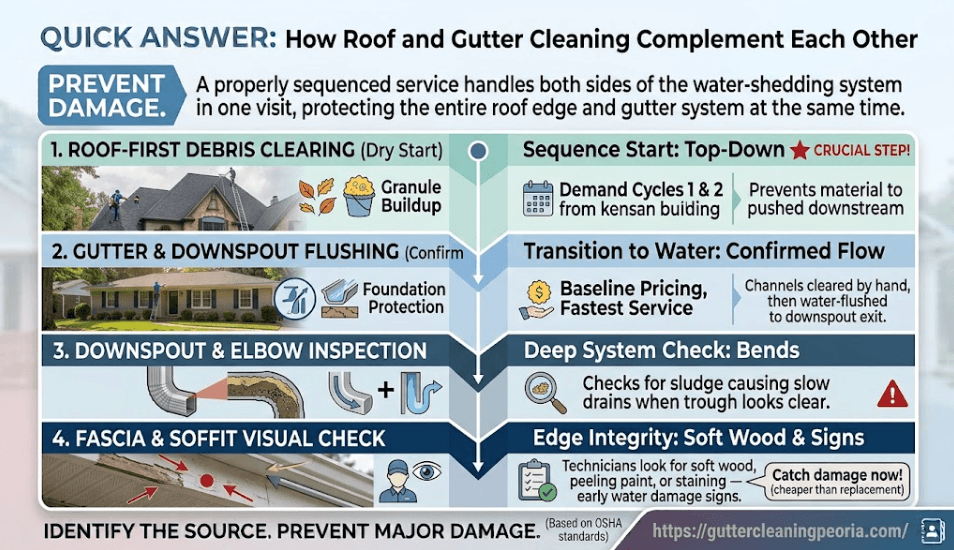
A properly sequenced service handles both sides of the water-shedding system in one visit:
- Roof-first debris clearing. Loose leaves, twigs, and granule buildup are cleared from valleys, ridges, and shaded sections before any gutter work starts, so material isn’t just pushed downstream.
- Gutter and downspout flushing. Channels are cleared by hand, then flushed with water to confirm proper flow all the way to the downspout exit and away from the foundation.
- Downspout and elbow inspection. Bends are checked for the compacted sludge that causes slow drains even when the gutter trough itself looks clear.
- Fascia and soffit visual check. Technicians look for soft wood, peeling paint, or staining — early signs of water damage that’s cheaper to catch now than after a full board replacement.
Doing these in sequence, rather than as two separate appointments months apart, is what actually protects the roof edge and the gutter system at the same time.
Local Factors That Make This Matter More in Peoria
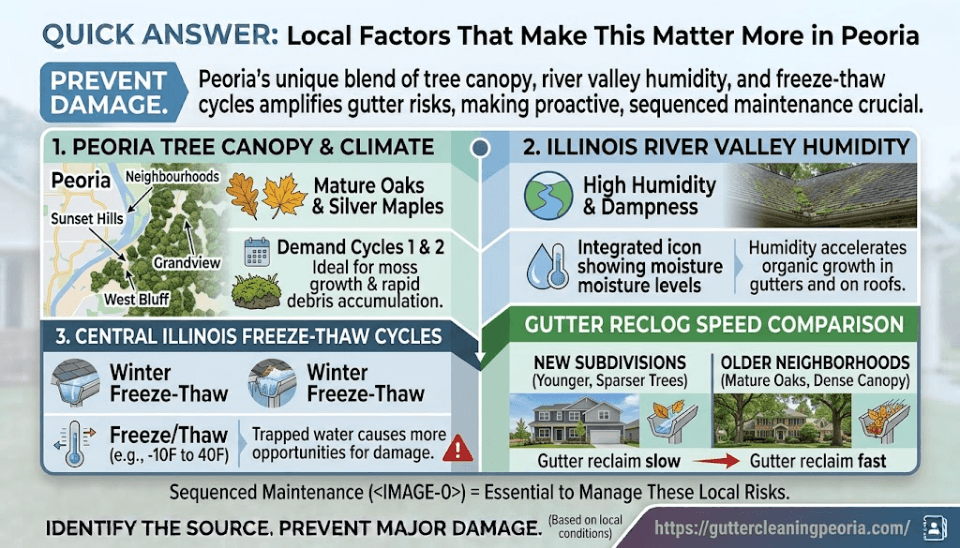
Peoria’s tree canopy, combined with Illinois River Valley humidity, creates ideal conditions for both moss growth and rapid debris accumulation. Homes near mature oaks and silver maples in neighborhoods like Sunset Hills, Grandview, or the West Bluff tend to see gutters reclog faster than newer subdivisions with younger, sparser trees. Add in freeze-thaw cycles typical of a Central Illinois winter, and any water that isn’t draining properly has more opportunities to cause damage before spring.
For general roof upkeep between professional visits, the <a href=”https://www.gaf.com/en-us/blog/your-home/annual-maintenance-and-roofing-tips-for-every-homeowner-28429b44-d47c-401d-9ff6-adc36bb0f093″ target=”_blank” rel=”noopener noreferrer nofollow”>GAF homeowner maintenance guide</a> outlines shingle inspection basics worth knowing before you get on a ladder yourself. On the drainage side, the EPA’s guidance on <a href=”https://www.epa.gov/soakuptherain/soak-rain-disconnect-redirect-downspouts” target=”_blank” rel=”noopener noreferrer nofollow”>downspout redirection and stormwater management</a> is a useful reference if you’re also trying to keep runoff away from your foundation and out of storm drains.
Signs You’re Overdue for Both Services
- Visible plant growth or dark streaking on roof valleys
- Water spilling over the gutter edge during moderate rain
- Sagging gutter sections or visible separation from the fascia
- Granules collecting in downspout splash zones
- Water stains on the fascia board or soffit
If two or more of these apply to your home, it’s a sign the roof and gutters need attention as a pair, not just one or the other.
Why Book a Combined Service Instead of Two Separate Ones
Scheduling roof debris removal and gutter cleaning together means the crew clears material in the correct order — roof to gutter to downspout — instead of cleaning gutters that get re-clogged by the next roof debris shed a week later. It also means one inspection covers both systems, so fascia rot or downspout misalignment gets flagged while a technician is already on-site, rather than discovered later as a bigger repair.
That’s the approach behind reliable gutter cleaning in Peoria — treating the roof edge and the gutter system as one connected job rather than two unrelated tasks. Homeowners looking for professional gutter and roof debris removal get both halves of the water-management system checked in a single visit, which is generally more cost-effective than booking separate appointments for each.
If you’re serving the greater Peoria community and want an assessment of how your roof debris is affecting your gutter performance, a same-visit inspection is the fastest way to find out before the next heavy rain or winter freeze.
Frequently Asked Questions
How often should Peoria homeowners clean their gutters and roof?
Twice a year is standard — once in late spring after seed pods and blossoms drop, and once in late fall after leaves have finished falling. Homes with heavy tree cover nearby may need a mid-summer check as well.
Can I clean my roof myself to save money?
Minor debris removal from the ground with a roof rake is reasonable for single-story homes. Climbing onto the roof itself, especially to treat moss or algae, carries fall risk and can damage shingles if done incorrectly, which is why most homeowners leave this part to a professional.
Does gutter cleaning alone fix drainage problems?
Not always. If the underlying issue is roof debris feeding the clog, or a downspout elbow packed with compacted sludge, clearing the visible gutter trough only offers a short-term fix. A full flush and downspout check is needed to confirm water is actually exiting the system.
What’s the difference between gutter guards and regular cleaning?
Gutter guards reduce large debris entry but don’t eliminate the need for maintenance — fine grit, seed pods, and shingle granules still get through most guard styles over time. Guards extend the interval between cleanings; they don’t remove the need for them entirely.
How do I know if my fascia board is already damaged?
Look for peeling paint, soft or spongy wood when pressed, dark staining below the gutter line, or a gutter that’s visibly pulling away from the roofline. Any of these point to moisture damage that’s progressed past a simple cleaning fix.
Is moss on my roof actually a problem, or just cosmetic?
It’s more than cosmetic. Moss holds moisture against the shingle surface, which accelerates granule loss and can lift shingle edges enough for wind-driven rain to get underneath. Left long enough, it shortens the usable life of the roof.
Does Peoria’s weather make gutter maintenance more urgent than in other regions?
The combination of heavy deciduous tree cover, spring storm frequency, and freeze-thaw winter cycles means clogged gutters in Peoria have more opportunities to cause ice dams and fascia damage compared to drier or less wooded climates. Regular maintenance matters more here than in regions with lighter tree cover.