
Peoria homeowners deal with a genuine rainfall problem that most gutter systems weren’t built to handle. Illinois State Water Survey data puts Peoria’s long-term annual precipitation at roughly 36.5 inches, and newer 30-year NOAA normals show that number trending even higher, with the city getting a little wetter and posting 37.55 inches of annual precipitation in the most recent measurement period. That volume, spread across spring thunderstorms, summer downpours, and winter freeze-thaw cycles, puts constant stress on gutters, downspouts, and fascia boards. If you’ve ever wondered why your gutters seem to fail faster here than they did somewhere drier, the answer is in the numbers. This guide breaks down exactly how that rainfall total translates into real wear on your home, and what routine gutter cleaning in Peoria actually prevents.
Table of Contents
Quick Answer: How Does Peoria’s Rainfall Affect Your Gutters?
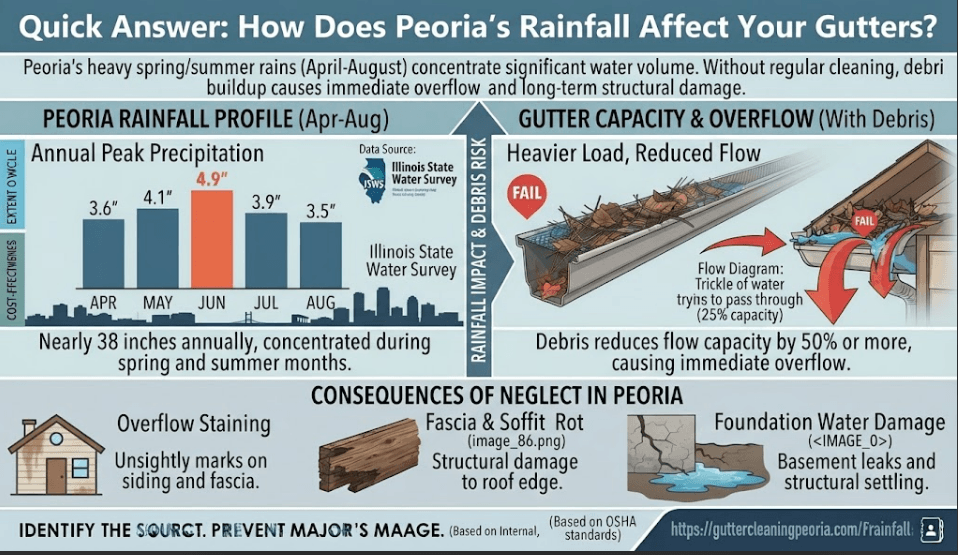
Peoria receives close to 36–38 inches of rain annually, with the heaviest months falling between April and August. Illinois State Water Survey normals show peak monthly precipitation of roughly 4.9 inches in June, 4.1 inches in May, and 3.9 inches in July. That concentration of rainfall means gutters carry a much heavier load during spring and summer than most manufacturers design for on a standard residential system. Without regular cleaning, debris buildup reduces water flow capacity by half or more, which leads to overflow, fascia rot, and foundation water damage well before a gutter system reaches the end of its expected lifespan. illinois
Peoria’s Rainfall by Season — and What It Does to Your Gutter System
Spring: The Heaviest Load of the Year
Spring is Peoria’s wettest stretch. April and May average 3.58 and 4.08 inches of rain respectively, arriving on top of leftover snowmelt and saturated ground. Gutters clogged with winter debris can’t move that volume fast enough, which is why spring is the single most common season for overflow-related fascia and soffit damage in this region. illinois
Summer: Short, Intense Downpours
Summer rainfall in central Illinois typically comes in showers and thunderstorms, occasionally accompanied by hail, and averages close to 3.75 inches per month. These storms dump water fast rather than steadily, which is exactly the condition that exposes undersized downspouts and sagging gutter sections. A system that looks fine during light rain can overflow completely during a 20-minute summer cloudburst. illinois
Fall: Leaf Debris Meets Steady Rain
Fall rain totals drop slightly but stay significant, and it’s the worst season for clogging. Falling leaves mix with rainwater to form a dense, compacted mat inside the gutter channel, which is far harder to clear than dry leaves alone and holds moisture against the gutter material longer.
Winter: Freeze-Thaw and Ice Dams
Central Illinois winters bring roughly 26 inches of snowfall on average, and Peoria’s freeze-thaw cycle means that meltwater refreezes overnight inside clogged gutters. That repeated expansion and contraction pulls fasteners loose, cracks seams, and creates ice dams that force water back up under roof shingles. illinois
Why Standard Gutters Struggle With Peoria’s Rainfall Volume
Most residential gutters are sized for average rainfall, not peak-month totals. When Peoria sees back-to-back weeks of heavy spring or summer rain, a gutter partially blocked by even a small amount of debris loses a significant percentage of its water-carrying capacity. Homeowners searching for gutter cleaning near me in Peoria are usually calling after they’ve already noticed one of these signs: water pouring over the front edge of the gutter during rain, visible sagging between hangers, or standing water pooling near the foundation after a storm.
The fix isn’t a bigger gutter — it’s keeping the existing system clear enough to handle Peoria’s rainfall pattern as it actually occurs, in short, heavy bursts rather than gentle, even rain.
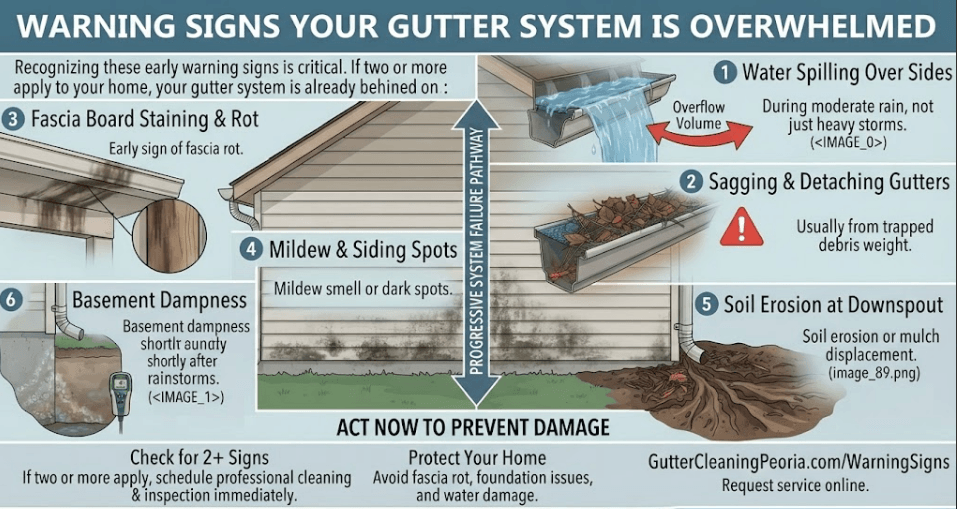
Warning Signs Your Gutter System Is Overwhelmed
- Water spilling over the sides during moderate rain, not just heavy storms
- Sagging or pulling-away gutter sections, usually from trapped debris weight
- Staining or streaking on fascia boards, an early sign of fascia board rot
- Mildew smell or dark spots on exterior siding below the gutter line
- Soil erosion or mulch displacement directly beneath downspout outlets
- Basement dampness appearing shortly after rainstorms, often tied to downspouts discharging too close to the foundation
If two or more of these apply to your home, the gutter system is already behind on maintenance, not just due for a routine check.
How Often Peoria Homes Should Schedule Gutter Cleaning
Given the seasonal breakdown above, twice-a-year cleaning (a common national recommendation) isn’t quite enough for most Peoria properties, especially those near mature trees. A more realistic schedule for this climate:
- Early spring — before the April–June rainfall peak, to clear winter debris and check for freeze damage
- Late fall — after leaf drop but before the first hard freeze, to prevent ice dam formation
- Mid-summer spot check — for properties with heavy tree cover, since summer storms can wash accumulated debris into downspout openings
Homes surrounded by oak or maple trees, or those with low-slope roofs that shed debris slowly, often benefit from a third or fourth visit. Local gutter cleaning services can flag a property-specific schedule during the first inspection rather than defaulting to a generic twice-yearly plan.
Protecting Your Home From Water Damage Caused by Gutter Overflow
Chronic gutter overflow doesn’t just mean wet siding — it’s a direct path to some of the most expensive repairs a homeowner can face:
- Foundation cracking, caused by repeated saturation of soil at the base of the house
- Fascia and soffit rot, from water sitting against wood trim for extended periods
- Basement and crawl space moisture, which can lead to mold growth
- Landscape erosion, washing out mulch beds and undermining walkways near downspout discharge points
The City of Peoria’s own stormwater management standards exist partly because of how much runoff local properties generate during peak rainfall months — a reminder that this isn’t just a homeowner-level issue but a citywide drainage concern. You can review the city’s stormwater ordinance details directly through the City of Peoria’s infrastructure standards documentation for context on how runoff is regulated at the property level.
Seamless Gutters vs. Traditional Sectional Gutters in Peoria’s Climate
Seamless gutters, formed on-site from a single continuous piece of aluminum, hold up noticeably better under Peoria’s rainfall pattern than sectional gutters with multiple seams. Fewer joints mean fewer leak points and less opportunity for debris to snag and build up at a seam. For homeowners rebuilding a gutter system after storm damage or persistent leaking, seamless aluminum is generally the more durable choice given how concentrated Peoria’s rainfall gets during peak months.
That said, seamless gutters still clog like any other system — the material change addresses leaks and seam failure, not debris accumulation. Regular cleaning remains necessary regardless of gutter type.
Getting Ahead of Peoria’s Rainfall Before It Damages Your Home
Peoria’s climate isn’t unusually extreme, but the concentration of rainfall into a handful of heavy months creates real stress on gutter systems that go unmaintained. A property owner who schedules cleaning around the actual seasonal pattern — spring, fall, and a summer check for tree-heavy lots — avoids the majority of water damage claims tied to gutter failure. For homeowners unsure where their system currently stands, guttercleaningpeoria.com offers inspections that identify capacity issues before the next storm season hits, serving the greater Peoria community with scheduling built around this exact rainfall pattern.
Frequently Asked Questions
How much rain does Peoria get in a typical year?
Long-term averages put annual precipitation at approximately 36.25 inches, with newer 30-year normals trending slightly higher, closer to 37–38 inches. illinois
What month gets the most rain in Peoria?
June averages the highest monthly total at roughly 4.9 inches, followed by May at about 4.1 inches. illinois
How often should I clean my gutters if I live in Peoria?
Most homes need cleaning at least twice a year — early spring and late fall — with a mid-summer check recommended for properties near mature trees.
Can clogged gutters really cause foundation damage?
Yes. When gutters overflow repeatedly, water pools at the base of the home instead of draining away through downspouts, which saturates soil and can lead to foundation cracking over time.
What’s the difference between seamless and sectional gutters for heavy rainfall areas?
Seamless gutters have fewer joints, which means fewer leak points and less debris snagging. They generally perform better in areas with concentrated, heavy rainfall like Peoria, though they still require regular cleaning.
Do gutter guards eliminate the need for cleaning?
No. Gutter guards reduce large debris buildup but don’t stop fine grit, seed pods, or shingle granules from accumulating over time. Systems with guards still need periodic inspection and cleaning, just less frequently.
What are the signs my downspouts aren’t handling Peoria’s rainfall properly?
Water pooling at the base of the downspout, erosion trenches in the surrounding soil, or basement dampness after storms all point to a downspout that’s either clogged or discharging too close to the foundation.
Is winter a risk factor for gutters even without heavy snowfall?
Yes. The freeze-thaw cycle common in central Illinois winters causes trapped water in clogged gutters to expand and contract repeatedly, which loosens fasteners and cracks seams even in years with lighter snow totals.