
Gutter Cleaning in Peoria is important for more than preventing water damage. Dry leaves, pine needles, twigs, and other debris can accumulate around gutters, fascia, and nearby soffit vents, creating conditions where an external ignition source could become more hazardous. Regular gutter cleaning and soffit inspections can help reduce debris buildup, protect the roofline, and identify potential ventilation or electrical concerns before they become bigger problems.
Table of Contents
Quick Answer: Do Clogged Gutters Increase Fire Risk?
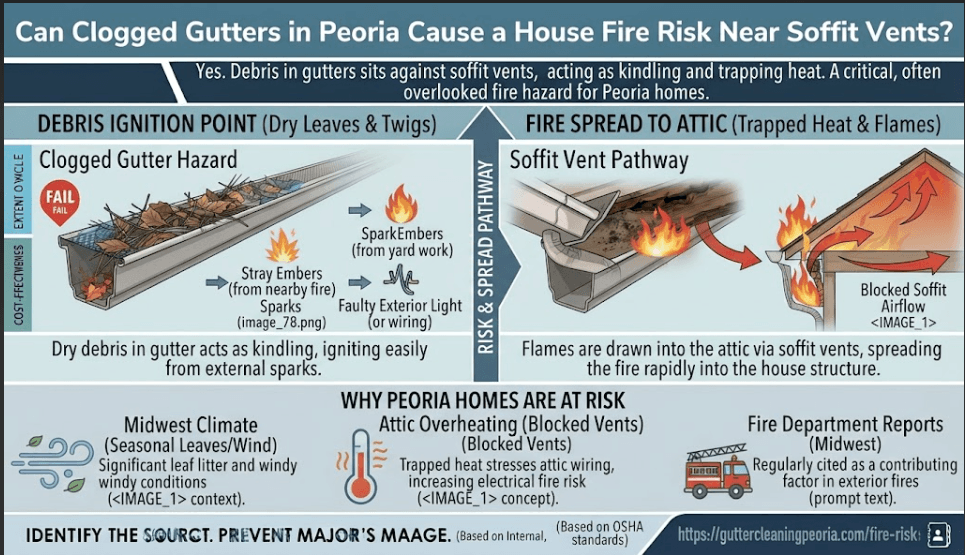
Yes. Dry leaves, twigs, and pine needles trapped in gutters sit directly against soffit vents and fascia boards. This debris acts as kindling for stray embers, sparks from nearby yard work, or faulty exterior lighting. It also blocks the airflow soffit vents are designed to provide, which lets heat and moisture build up in the attic and puts stress on any wiring running through that space. The risk isn’t hypothetical — fire departments across the Midwest regularly cite debris-packed gutters and eaves as a contributing factor in exterior home fires that spread into the attic.
How Clogged Gutters Near Soffit Vents Create a Fire Hazard
Soffit vents pull fresh air into your attic to balance temperature and moisture. When gutters overflow with dry organic material, that debris doesn’t stay put — wind pushes it into the vent openings, and it accumulates on the fascia board directly above.
A few specific mechanisms turn this into a genuine fire hazard:
- Ember and spark ignition. A stray ember from a neighbor’s fire pit, a dropped cigarette, or sparks from an angle grinder or gas trimmer can land in dry gutter debris and smolder before flaring up against the wood fascia.
- Pest nesting near wiring. Squirrels and birds often build nests in clogged gutters and soffit cavities. Rodents chew through insulation on exterior wiring and low-voltage landscape lighting cables, creating exposed conductors near flammable nesting material.
- Blocked ventilation and heat buildup. When soffit vents are packed with debris, attic airflow drops. In summer this raises attic temperatures around wiring and light fixtures; in winter it worsens ice dam formation, which has been linked to shorted gutter heat-tape cords and exterior outlet failures.
- Fascia and soffit wood rot. Constant moisture trapped by clogged gutters softens the wood behind your soffit. Rotted wood ignites more easily and burns faster than sound lumber, giving a small spark more fuel to work with.
None of these factors alone usually causes a fire. Stacked together — dry debris, a nearby ignition source, and compromised wood — they turn a minor spark into a real structure fire risk, especially in older homes.
Why This Matters More for Peoria Homes
Peoria’s tree canopy along neighborhoods like the West Bluff, University District, and areas near Bradley Park drops a heavy volume of oak, maple, and pine debris every October and November. Combined with dry, breezy fall weather common in central Illinois, that debris often sits in gutters for weeks before the first hard rain washes it down — plenty of time to dry out completely and become effective kindling.
Many homes in Peoria’s older neighborhoods still have original wood soffits and fascia rather than aluminum or vinyl, which means the wood behind a clogged gutter is more susceptible to both rot and ignition than in newer construction. Spring storm season adds another layer: high winds after a dry spell can carry embers or debris from grass fires and controlled burns onto rooftops and directly into packed gutter systems.
Warning Signs Your Gutters Are Putting Your Soffit at Risk
- Visible plant growth or moss sprouting from the gutter line
- Water spilling over the gutter edge during rain instead of draining through downspouts
- Dark staining or streaking on the fascia board below the gutter
- Soft or spongy fascia wood when pressed
- Bird or squirrel activity around the roofline
- A musty smell coming from the attic near the eaves
- Visible sagging where gutters pull away from the fascia
If you notice two or more of these signs, the debris load has likely been sitting long enough to affect both the wood and the ventilation behind it.
Prevention Steps for Peoria Homeowners
- Clean gutters at least twice a year — once in late spring after seed pods and blossoms drop, and once in late November after leaf fall is mostly finished.
- Inspect soffit vents directly, not just the gutter trough, since debris can pack into the vent screen itself.
- Trim overhanging branches at least 6 feet back from the roofline to cut down on the volume of debris landing in the gutter each season.
- Install gutter guards on sections that run under heavy tree cover, which reduces how often manual cleaning is needed without eliminating it entirely.
- Check exterior wiring and low-voltage lighting near the eaves annually for chew marks or exposed insulation.
- Keep yard-waste burning and fire pits well away from the house, ideally more than 25 feet from any roofline with overhanging gutters.
The National Fire Protection Association recommends treating exterior debris accumulation as part of routine home fire prevention, not just a landscaping chore — gutters and eaves fall squarely into that category.
When to Call a Professional Gutter Cleaning Service
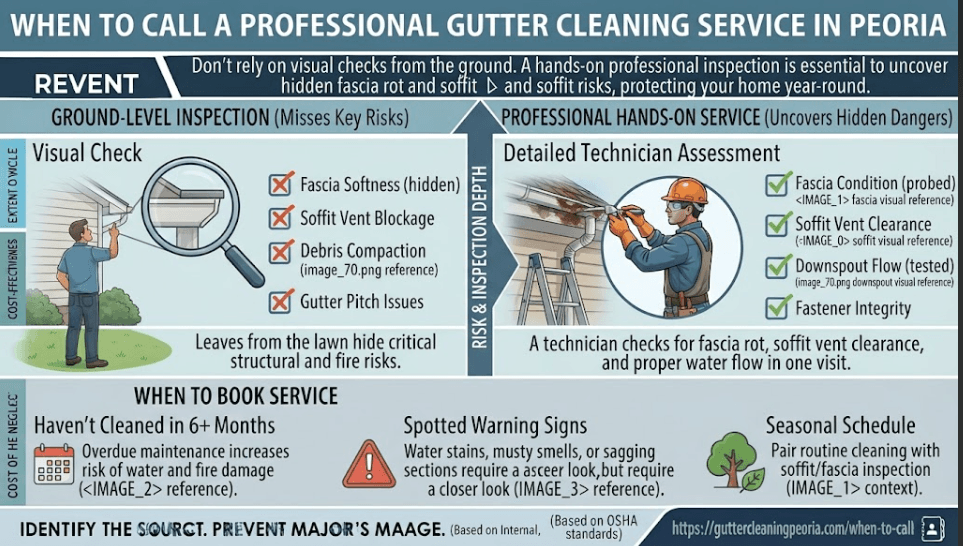
A visual check from the ground misses most of what matters here — how compacted the debris is, whether it’s reached the soffit vent screen, and whether the fascia underneath has started to soften. A hands-on inspection during a routine cleaning catches these issues before they turn into a repair bill or a safety issue.
If your gutters haven’t been cleaned in over six months, or you’ve spotted any of the warning signs above, it’s worth having a technician take a closer look rather than waiting for the next storm to make the decision for you. For homeowners looking for dependable gutter cleaning in Peoria, a seasonal cleaning schedule paired with a soffit and fascia inspection is the simplest way to stay ahead of both water damage and this lesser-known fire risk.
Full-service teams serving the greater Peoria community typically check downspout flow, fascia condition, and vent clearance in the same visit — details worth confirming before you book, since not every service includes a soffit check by default. You can find more background on how gutter systems interact with attic ventilation through resources like InterNACHI’s home inspection library, which covers soffit and fascia inspection standards in more depth.
FAQs
Can clogged gutters actually start a fire on their own?
No. Clogged gutters don’t ignite by themselves. The risk comes from combining dry debris with an outside ignition source — embers, sparks, or faulty wiring — near the soffit and fascia.
How often should gutters near soffit vents be cleaned in Peoria?
Most Peoria homes need cleaning at least twice a year: late spring and late fall. Homes with heavy tree cover may need a mid-summer check as well.
Do gutter guards eliminate the fire risk entirely?
Gutter guards reduce debris buildup significantly but don’t stop fine particles like pine needles and seed pods from collecting over time. Periodic inspection is still necessary.
What does a compromised soffit vent look like?
Look for a vent screen packed with dark, matted debris, staining on the fascia directly below it, or visible gaps where pests have widened the opening.
Are older Peoria homes more at risk than newer ones?
Generally yes. Homes with original wood soffits and fascia, common in Peoria’s older neighborhoods, are more vulnerable to both rot and ignition than newer homes with aluminum or vinyl trim.
Does homeowners insurance cover fire damage linked to gutter neglect?
Coverage depends on the policy and the insurer’s determination of maintenance neglect versus accidental damage. Most policies expect routine gutter maintenance as part of standard home upkeep.
Can pest activity in gutters really lead to electrical fires?
Yes. Rodents and birds nesting in clogged gutters or soffit cavities can chew through wire insulation, exposing conductors near dry nesting material — a documented cause of exterior electrical fires.