
Hidden Costs of Neglected Gutters: A Peoria Homeowner’s Breakdown
Most Peoria homeowners think of gutters as a once-a-year chore, but skipping regular gutter cleaning in Peoria turns a $150 maintenance visit into a multi-thousand-dollar repair bill. Clogged gutters don’t just overflow during a storm — they quietly damage your foundation, roofline, and siding for months before the problem becomes visible. This breakdown walks through exactly what neglected gutters cost Peoria homeowners, and how to catch the warning signs before they turn into a five-figure repair.
Table of Contents
Why Gutter Cleaning in Peoria Costs Less Than the Alternative
Quick Answer: Neglecting gutter cleaning in Peoria typically costs homeowners $2,000–$15,000 over time in foundation repair, fascia board rot, basement water damage, and pest removal — compared to $100–$250 for a routine cleaning. The longer debris sits, the faster water finds its way into places it was never meant to go.
Peoria sits in a humid continental climate zone, and rainfall is spread fairly evenly across the year, with spring bringing the heaviest downpours of the season. That means clogged gutters here don’t get a break — they’re tested by wet weather nearly every month, and a blockage that forms in autumn leaves can sit through winter freeze-thaw cycles before you notice a problem in spring.

The Real Costs Hiding Behind a Clogged Gutter
A gutter that isn’t doing its job doesn’t fail quietly. It creates a chain reaction, and each link in that chain has a price tag attached.
1. Foundation Damage
When water can’t flow through the downspouts, it spills over the gutter’s edge and pools right at your foundation. Over repeated freeze-thaw cycles, that water works its way into hairline cracks, expands, and widens them. Foundation crack repair in the Midwest commonly runs $2,000–$10,000, and in severe cases involving structural underpinning, costs can climb well past $15,000. A downspout realignment and a clean gutter run is almost always cheaper than a single foundation repair visit.
2. Fascia Board Rot
The fascia board is the wood trim that gutters are mounted to. Standing water in a clogged gutter sits against this board nonstop, and untreated wood starts to soften and rot within a single wet season. Once rot sets in, you’re not just cleaning gutters anymore — you’re replacing fascia boards, and in some cases the soffit and roof decking behind them.
3. Basement and Crawl Space Flooding
Overflow that pools near the foundation doesn’t stay outside. It seeps through basement walls, floor seams, and crawl space vents. Homeowners often blame basement moisture on the water heater or a cracked pipe, when the real source is a gutter that hasn’t been cleared in over a year.
4. Pest Infestations
Standing water and decomposing leaves in a gutter create a breeding ground for mosquitoes, and the damp wood underneath attracts carpenter ants and termites. Pest control add-ons for a wood-rot infestation can add hundreds of dollars on top of the repair itself.
5. Landscaping and Hardscape Erosion
Overflowing gutters dump concentrated water in the same spot every time it rains, which erodes mulch beds, washes out topsoil, and can undermine walkway pavers over a season or two. Re-grading and replacing landscaping beds isn’t cheap, and it’s a cost that’s completely avoidable with routine maintenance.
6. Ice Dams in Winter
Illinois winters bring hard freezes, and a gutter packed with debris holds melting snow instead of draining it. That trapped water refreezes, forms an ice dam, and forces water back up under your shingles. Roof leaks caused by ice dams are one of the most expensive gutter-related repairs homeowners face, often requiring both roof and interior drywall work.
What Neglect Actually Costs vs. Routine Maintenance
| Issue Caused by Clogged Gutters | Typical Repair Cost Range |
|---|---|
| Routine gutter cleaning (preventive) | $100 – $250 |
| Fascia board replacement | $300 – $1,500 |
| Basement waterproofing after seepage | $1,500 – $6,000 |
| Foundation crack repair | $2,000 – $10,000+ |
| Ice dam roof leak repair | $1,000 – $4,000 |
| Landscape/hardscape restoration | $500 – $3,000 |
Two or three seasons of skipped cleanings can easily tip a homeowner from the top row of this table into several of the rows below it.
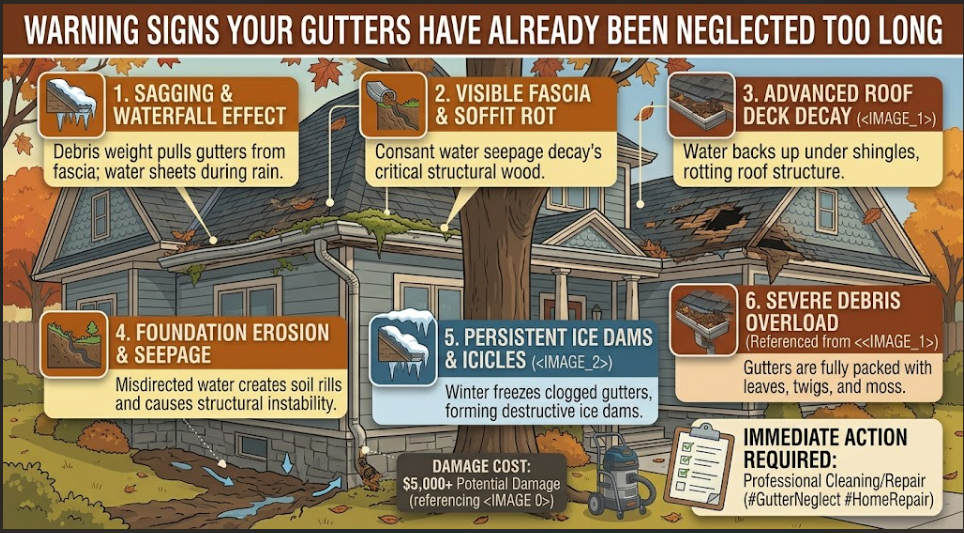
Warning Signs Your Gutters Have Already Been Neglected Too Long
- Visible plant growth or moss sprouting from the gutter trough
- Water marks or streaking on siding below the gutter line
- Sagging gutter sections pulling away from the fascia
- Puddling near the foundation after rainfall
- Peeling paint or a musty smell in the basement
- Shingle granules collecting at the base of downspouts
If you’re seeing two or more of these signs, the gutter has likely been compromised for at least one full season already.
How Often Peoria Homes Actually Need Gutter Cleaning
Most homes in the Peoria area do well with two cleanings per year — once in late spring after seed pods and blossoms drop, and once in late fall after the last leaves come down. Homes shaded by mature oak or maple trees, which are common throughout Peoria’s older neighborhoods, often need a mid-summer check as well. Homes on open lots with fewer trees can sometimes stretch to one thorough annual cleaning, paired with a quick visual inspection after major storms.
DIY Cleaning vs. Calling a Professional
DIY cleaning works for single-story homes with easy roof access and no underlying gutter damage. It stops making sense once you’re dealing with a two-story home, a steep roof pitch, or gutters that haven’t been touched in over a year — at that point, hidden fascia rot or loose brackets can turn a ladder job into a fall hazard. A professional visit also includes a full downspout flow test and a check for sagging or separated seams, which a quick leaf-scoop from a ladder usually misses.
If it’s been more than a season since your last cleaning, a professional gutter cleaning service in Peoria can flag fascia or downspout issues while they’re still cheap to fix, rather than after they’ve turned into a foundation or roofing bill.
Manufacturer and Municipal Resources
For homeowners who want to understand seasonal rainfall patterns that drive gutter overflow risk, the National Weather Service publishes normal monthly precipitation data for the Peoria area. For guidance on preventing indoor mold growth caused by water intrusion, the EPA’s mold and moisture control resources outline how excess moisture behind walls and in basements develops and how to address it early.
Get Ahead of the Damage
Gutter neglect is one of the few home maintenance costs that grows every month you delay it. A clogged gutter in October is a cheap fix. The same clogged gutter in March, after a winter of freeze-thaw cycles, can mean foundation cracks, fascia replacement, and a wet basement. Routine seasonal maintenance from gutter cleaning Peoria homeowners trust protects the parts of your home that are the most expensive to fix once water gets in. For a team serving the greater Peoria community with straightforward, no-surprise pricing, gutter cleaning near me is one search away from a solved problem instead of a growing one.
Frequently Asked Questions
How much does neglected gutter damage typically cost to fix in Peoria? Depending on severity, repairs range from a few hundred dollars for fascia board replacement to over $10,000 for foundation repair. The cost climbs the longer the underlying clog goes unaddressed.
Can clogged gutters really cause foundation problems? Yes. When gutters overflow, water pools directly against the foundation instead of being carried away by downspouts. Repeated saturation and freeze-thaw cycles widen existing cracks and can lead to structural settling over time.
How do I know if my gutters have fascia board rot? Look for soft, discolored, or crumbling wood behind the gutter line, sagging gutter sections, or gutters pulling away from the roofline. Tapping the fascia with a screwdriver handle is a quick test — sound wood resists, rotted wood gives easily.
Is it cheaper to clean gutters myself or hire someone? DIY cleaning saves money upfront but carries fall risk and often misses early warning signs like loose brackets or hairline fascia damage. A professional visit costs more per session but usually catches problems while they’re still inexpensive to fix.
How often should gutters be cleaned in the Peoria area? Twice a year is standard — late spring and late fall. Homes with heavy tree cover nearby may need a third cleaning in mid-summer to stay ahead of buildup.
Do ice dams really cause that much damage? Yes. Trapped meltwater from an ice dam can back up under shingles and leak into the attic and interior walls, leading to both roof repair and interior drywall or insulation replacement — often a more expensive fix than the roof itself.
What’s the first sign that gutters need attention? Water streaking on siding below the gutter line is usually the earliest visible sign, often appearing before any pooling or sagging is noticeable from the ground.Most Peoria homeowners think of gutters as a once-a-year chore, but skipping regular gutter cleaning in Peoria turns a $150 maintenance visit into a multi-thousand-dollar repair bill. Clogged gutters don’t just overflow during a storm — they quietly damage your foundation, roofline, and siding for months before the problem becomes visible. This breakdown walks through exactly what neglected gutters cost Peoria homeowners, and how to catch the warning signs before they turn into a five-figure repair.
Why Gutter Cleaning in Peoria Costs Less Than the Alternative
Quick Answer: Neglecting gutter cleaning in Peoria typically costs homeowners $2,000–$15,000 over time in foundation repair, fascia board rot, basement water damage, and pest removal — compared to $100–$250 for a routine cleaning. The longer debris sits, the faster water finds its way into places it was never meant to go.
Peoria sits in a humid continental climate zone, and rainfall is spread fairly evenly across the year, with spring bringing the heaviest downpours of the season. That means clogged gutters here don’t get a break — they’re tested by wet weather nearly every month, and a blockage that forms in autumn leaves can sit through winter freeze-thaw cycles before you notice a problem in spring.
The Real Costs Hiding Behind a Clogged Gutter
A gutter that isn’t doing its job doesn’t fail quietly. It creates a chain reaction, and each link in that chain has a price tag attached.
1. Foundation Damage
When water can’t flow through the downspouts, it spills over the gutter’s edge and pools right at your foundation. Over repeated freeze-thaw cycles, that water works its way into hairline cracks, expands, and widens them. Foundation crack repair in the Midwest commonly runs $2,000–$10,000, and in severe cases involving structural underpinning, costs can climb well past $15,000. A downspout realignment and a clean gutter run is almost always cheaper than a single foundation repair visit.
2. Fascia Board Rot
The fascia board is the wood trim that gutters are mounted to. Standing water in a clogged gutter sits against this board nonstop, and untreated wood starts to soften and rot within a single wet season. Once rot sets in, you’re not just cleaning gutters anymore — you’re replacing fascia boards, and in some cases the soffit and roof decking behind them.
3. Basement and Crawl Space Flooding
Overflow that pools near the foundation doesn’t stay outside. It seeps through basement walls, floor seams, and crawl space vents. Homeowners often blame basement moisture on the water heater or a cracked pipe, when the real source is a gutter that hasn’t been cleared in over a year.
4. Pest Infestations
Standing water and decomposing leaves in a gutter create a breeding ground for mosquitoes, and the damp wood underneath attracts carpenter ants and termites. Pest control add-ons for a wood-rot infestation can add hundreds of dollars on top of the repair itself.
5. Landscaping and Hardscape Erosion
Overflowing gutters dump concentrated water in the same spot every time it rains, which erodes mulch beds, washes out topsoil, and can undermine walkway pavers over a season or two. Re-grading and replacing landscaping beds isn’t cheap, and it’s a cost that’s completely avoidable with routine maintenance.
6. Ice Dams in Winter
Illinois winters bring hard freezes, and a gutter packed with debris holds melting snow instead of draining it. That trapped water refreezes, forms an ice dam, and forces water back up under your shingles. Roof leaks caused by ice dams are one of the most expensive gutter-related repairs homeowners face, often requiring both roof and interior drywall work.
What Neglect Actually Costs vs. Routine Maintenance
| Issue Caused by Clogged Gutters | Typical Repair Cost Range |
|---|---|
| Routine gutter cleaning (preventive) | $100 – $250 |
| Fascia board replacement | $300 – $1,500 |
| Basement waterproofing after seepage | $1,500 – $6,000 |
| Foundation crack repair | $2,000 – $10,000+ |
| Ice dam roof leak repair | $1,000 – $4,000 |
| Landscape/hardscape restoration | $500 – $3,000 |
Two or three seasons of skipped cleanings can easily tip a homeowner from the top row of this table into several of the rows below it.
Warning Signs Your Gutters Have Already Been Neglected Too Long
- Visible plant growth or moss sprouting from the gutter trough
- Water marks or streaking on siding below the gutter line
- Sagging gutter sections pulling away from the fascia
- Puddling near the foundation after rainfall
- Peeling paint or a musty smell in the basement
- Shingle granules collecting at the base of downspouts
If you’re seeing two or more of these signs, the gutter has likely been compromised for at least one full season already.
How Often Peoria Homes Actually Need Gutter Cleaning
Most homes in the Peoria area do well with two cleanings per year — once in late spring after seed pods and blossoms drop, and once in late fall after the last leaves come down. Homes shaded by mature oak or maple trees, which are common throughout Peoria’s older neighborhoods, often need a mid-summer check as well. Homes on open lots with fewer trees can sometimes stretch to one thorough annual cleaning, paired with a quick visual inspection after major storms.
DIY Cleaning vs. Calling a Professional
DIY cleaning works for single-story homes with easy roof access and no underlying gutter damage. It stops making sense once you’re dealing with a two-story home, a steep roof pitch, or gutters that haven’t been touched in over a year — at that point, hidden fascia rot or loose brackets can turn a ladder job into a fall hazard. A professional visit also includes a full downspout flow test and a check for sagging or separated seams, which a quick leaf-scoop from a ladder usually misses.
If it’s been more than a season since your last cleaning, a professional gutter cleaning service in Peoria can flag fascia or downspout issues while they’re still cheap to fix, rather than after they’ve turned into a foundation or roofing bill.
Manufacturer and Municipal Resources
For homeowners who want to understand seasonal rainfall patterns that drive gutter overflow risk, the National Weather Service publishes normal monthly precipitation data for the Peoria area. For guidance on preventing indoor mold growth caused by water intrusion, the EPA’s mold and moisture control resources outline how excess moisture behind walls and in basements develops and how to address it early.
Get Ahead of the Damage
Gutter neglect is one of the few home maintenance costs that grows every month you delay it. A clogged gutter in October is a cheap fix. The same clogged gutter in March, after a winter of freeze-thaw cycles, can mean foundation cracks, fascia replacement, and a wet basement. Routine seasonal maintenance from gutter cleaning Peoria homeowners trust protects the parts of your home that are the most expensive to fix once water gets in. For a team serving the greater Peoria community with straightforward, no-surprise pricing, gutter cleaning near me is one search away from a solved problem instead of a growing one.
Frequently Asked Questions
How much does neglected gutter damage typically cost to fix in Peoria?
Depending on severity, repairs range from a few hundred dollars for fascia board replacement to over $10,000 for foundation repair. The cost climbs the longer the underlying clog goes unaddressed.
Can clogged gutters really cause foundation problems?
Yes. When gutters overflow, water pools directly against the foundation instead of being carried away by downspouts. Repeated saturation and freeze-thaw cycles widen existing cracks and can lead to structural settling over time.
How do I know if my gutters have fascia board rot?
Look for soft, discolored, or crumbling wood behind the gutter line, sagging gutter sections, or gutters pulling away from the roofline. Tapping the fascia with a screwdriver handle is a quick test — sound wood resists, rotted wood gives easily.
Is it cheaper to clean gutters myself or hire someone?
DIY cleaning saves money upfront but carries fall risk and often misses early warning signs like loose brackets or hairline fascia damage. A professional visit costs more per session but usually catches problems while they’re still inexpensive to fix.
How often should gutters be cleaned in the Peoria area?
Twice a year is standard — late spring and late fall. Homes with heavy tree cover nearby may need a third cleaning in mid-summer to stay ahead of buildup.
Do ice dams really cause that much damage?
Yes. Trapped meltwater from an ice dam can back up under shingles and leak into the attic and interior walls, leading to both roof repair and interior drywall or insulation replacement — often a more expensive fix than the roof itself.
What’s the first sign that gutters need attention?
Water streaking on siding below the gutter line is usually the earliest visible sign, often appearing before any pooling or sagging is noticeable from the ground.