
A few leaves sitting in your gutters after a fall storm isn’t a crisis. Leaves left there for months, through freeze cycles, spring rain, and a second round of debris, is a different story. What starts as a pile of organic matter slowly turns into a compacted, water-holding mass that damages your roofline from the inside out. This breaks down exactly what happens when gutter cleaning in Peoria gets pushed off too long, and why the timeline matters more than most homeowners assume.
Table of Contents
Quick Answer: How Long Before Decomposing Leaves Damage Gutters?
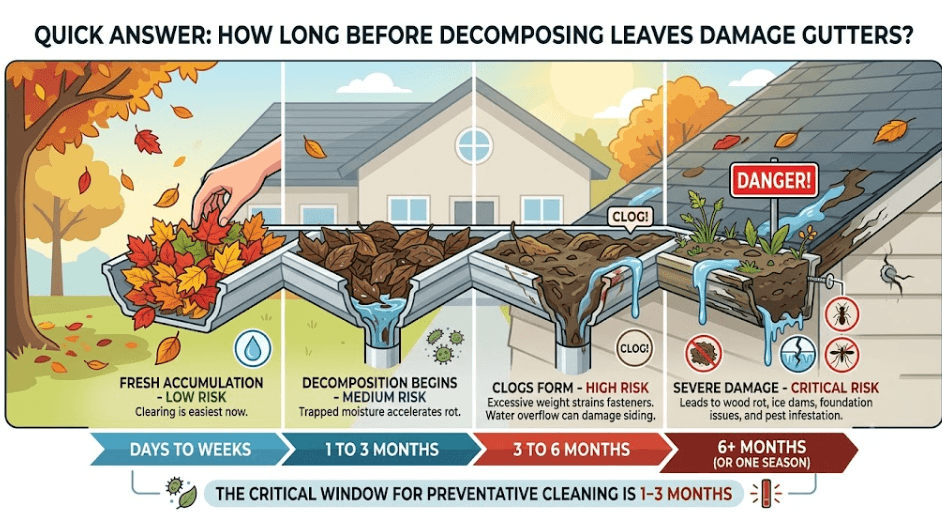
Leaves left in gutters for more than 4 to 6 weeks begin breaking down into a dense, waterlogged sludge that blocks drainage and adds significant weight to the gutter system. Left for an entire season or longer, that decomposing debris holds moisture against the fascia board, corrodes metal gutters from the inside, and creates standing water that attracts pests. The damage isn’t sudden, it compounds week over week the longer the debris sits.
Week One to Four: Debris Piles Up, No Damage Yet
Fresh leaves in a gutter are mostly harmless in the short term. They block some water flow but haven’t started breaking down into anything that holds moisture long-term. This is the window where a simple gutter cleaning in Peoria resolves the issue completely with no lasting effects on the system.
Month Two: Decomposition Begins
Once leaves sit wet for several weeks, they start to break down. The dry, light debris compacts into a heavier, saturated mass that clings to the gutter trough instead of washing through with rainfall. At this stage, water no longer flows freely even during light rain, since the wet leaf mass acts like a dam at the low point of every run.
Month Three and Beyond: Structural Damage Sets In
This is where the real cost starts. Decomposing organic matter holds water against the metal or vinyl gutter surface far longer than clean debris would, and that constant moisture accelerates rust in steel gutters and corrosion in aluminum ones. The extra weight, sometimes several pounds per linear foot once leaves are fully saturated, pulls at hangers and fasteners, causing sections to sag or separate from the fascia board entirely. Prolonged moisture contact also leads to fascia board rot, since the wood trim behind the gutter absorbs water it was never designed to hold for months at a time.
The Weight Problem Nobody Talks About
A gutter full of dry leaves weighs very little. The same volume of decomposed, waterlogged debris can weigh five to ten times more. That added weight is constant, not occasional, and it’s distributed across every hanger and fastener holding the gutter to your roofline. Over a full season, that sustained load is enough to bend aluminum gutters, pull screws loose from wood fascia, and in severe cases, tear an entire section free during a heavy storm.
Standing Water and Pest Problems
Decomposing leaf matter doesn’t just block water, it holds it. A dam of wet leaves creates small pools of standing water that don’t drain even between rain events. According to the National Pesticide Information Center, one of the most effective mosquito prevention steps homeowners can take is making sure gutters are draining properly rather than holding standing water. Clogged, decomposing gutters are also an attractive nesting spot for birds and rodents looking for shelter and material, adding a pest problem on top of the drainage issue.
Water Damage That Spreads Beyond the Gutter
Once a gutter section is dammed with decomposing debris, overflow doesn’t just spill onto the ground below, it runs down the siding, pools near the foundation, and in some cases works its way behind fascia boards and into the roof deck. This is how a gutter problem turns into a much larger water damage repair involving siding, foundation grading, or even interior ceiling stains if water finds its way into the attic space. The cost difference between a routine cleaning and this kind of secondary damage is significant, often the difference between a $150 service call and a multi-thousand-dollar repair.
What to Do If Leaves Have Already Been Sitting for Months
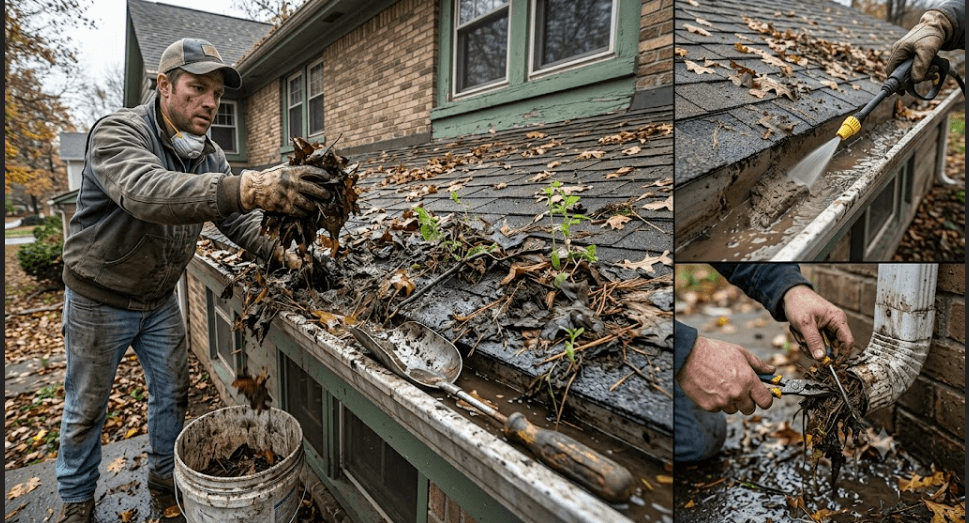
If it’s been a full season or longer since your last cleaning, don’t just scoop out the visible debris. At that point, a full inspection matters more than the cleaning itself:
- Check for sagging sections or separated hangers along the entire run.
- Look for water stains or soft spots on the fascia board directly behind the gutter.
- Confirm downspouts aren’t packed with compacted debris that a quick scoop won’t remove.
- Watch for standing water after the cleaning is done, which signals a slope problem underneath the old debris.
If any of these show up, the issue has moved past routine maintenance. Our <a href=”https://guttercleaningpeoria.com/gutter-repair-peoria-il/”>gutter repair services in Peoria</a> address sagging sections, fascia damage, and separated hangers caused by long-term debris buildup, and our <a href=”https://guttercleaningpeoria.com/gutter-installation-peoria-il/”>gutter installation team</a> steps in when a system has deteriorated too far to repair. For homes that keep facing the same buildup problem season after season, <a href=”https://guttercleaningpeoria.com/gutter-guard-installation-peoria-il/”>gutter guard installation in Peoria</a> significantly cuts down how much organic debris accumulates between cleanings.
FAQs
Does a full gutter of wet leaves really weigh that much more?
Significantly more. Saturated, decomposed leaf debris can weigh several times what the same volume of dry leaves weighs, putting sustained stress on hangers and fasteners.
How often should gutters be cleaned to avoid decomposition damage?
Twice a year at minimum, in late fall after leaf drop and again in early spring. Homes with heavy tree cover nearby may need a third cleaning mid-season to stay ahead of buildup.
Can decomposing leaves actually damage metal gutters?
Yes. Prolonged moisture contact from decomposing organic matter accelerates rust in steel gutters and corrosion in aluminum ones, especially at seams and joints where water sits longest.
Will cleaning gutters late in the season still help?
Yes, but the longer debris sits, the more likely you are to find secondary damage, like fascia rot or sagging sections, that a simple cleaning won’t fix on its own.
Do gutter guards stop leaves from decomposing in the gutter?
Gutter guards significantly reduce how much leaf debris enters the gutter in the first place, which cuts down on decomposition buildup, though guards still need periodic inspection.
Can clogged, decomposing gutters attract pests?
Yes. Standing water created by debris dams is a known mosquito breeding site, and the organic material itself can attract birds and rodents looking for nesting material.
How do I know if decomposing leaves have already caused damage?
Look for sagging gutter sections, water stains or soft wood on the fascia board, and standing water that doesn’t drain even after cleaning. Any of these point to damage beyond routine debris buildup.
Serving the greater Peoria community, including Peoria Heights, East Peoria, Pekin, Dunlap, Bellevue, and Bartonville. Call (309) 321-9089 for a free estimate.