
Every winter, Peoria homeowners find water stains on a bedroom ceiling and blame the roof. Often the real problem is a ridge of ice sitting in a clogged gutter. Gutter cleaning in Peoria before the first hard freeze gives melting snow somewhere to go. That cuts your ice dam risk and protects the fascia board, shingles, and insulation below the roofline. Here is the full plan, from the Central Illinois timeline to the attic fixes that stop ice dams for good.
Table of Contents
Why Gutter Cleaning in Peoria Matters Before the First Freeze
Quick Answer
What causes ice dams in Central Illinois, and how do you prevent them? Ice dams form when heat leaking from your living space warms the roof deck and melts the snow on it. The meltwater runs down to the cold eaves and refreezes, and the ice piles up into a dam. Water then backs up under the shingles. To prevent them, do three things:
- Clear your gutters and downspouts in late fall.
- Seal attic air leaks and add insulation to keep the roof cold.
- Remove heavy snow from the lower roof after big storms.
Clean gutters won’t stop an ice dam alone, but clogged ones make dams bigger and heavier, and far more likely to leak.
Peoria winters swing above and below freezing many times between December and March. A sunny 36°F afternoon melts the snow on your roof, and the 18°F night refreezes it. Each cycle adds another layer of ice at the eaves. If the gutter is packed with leaves, the water has no channel and freezes in place.
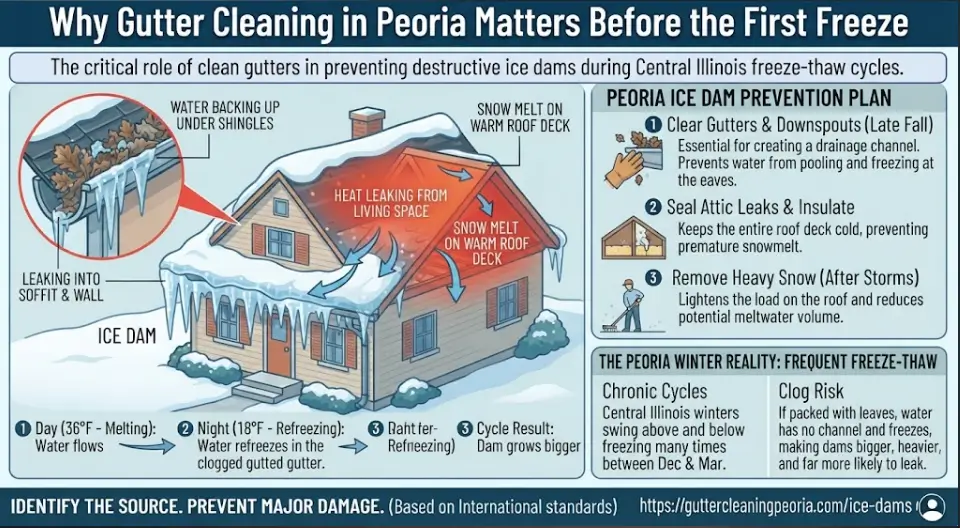
How Ice Dams Form on a Peoria Roof
An ice dam needs three things: snow, heat escaping from the house, and a cold roof edge. Without heat loss, the snow stays frozen and slides off or melts evenly.
The usual heat leaks are:
- Recessed can lights that open into the attic
- Attic hatches with no weatherstripping
- Bathroom and kitchen fans that vent into the attic instead of outside
- Gaps around plumbing stacks, chimneys, and wiring
- Leaky ductwork running through the attic
- Thin or compressed insulation
The weight matters too. A gutter full of frozen debris and ice can pull away from the fascia, bend at the hangers, or crack at the seams. Seamless aluminum handles normal loads, but a solid block of ice and wet leaves is far heavier than what the gutter was designed to hold.
Peoria’s Tree Problem: Why Fall Cleaning Alone Isn’t Enough
Central Illinois yards are full of silver maple, cottonwood, and pin oak. Maples and cottonwoods drop their loads early. Pin oaks hold many of their dead leaves into winter and let go through December and even early spring. That means a single October cleaning can be undone by the first snowstorm.
If your lot has pin oaks, plan for a second pass. A quick check in December, or a thaw-day rinse in late winter, catches what dropped after the first cleaning.
Your Peoria Winter Gutter Timeline
| When | What to do |
|---|---|
| Mid-October to mid-November | Main cleaning after most leaves are down. Flush downspouts and confirm water exits at least 4–6 feet from the foundation. |
| Early December | Check for pin oak or late-drop debris. Look for sagging sections and loose hangers. |
| After any snowfall over 6 inches | Clear the bottom 3–4 feet of roof with a roof rake from the ground. Don’t climb up. |
| January–February thaw | Look for icicles thicker than your wrist, ice bulging from the gutter edge, or water staining the soffit. These signal an active ice dam. |
| Late March to April | Cleaning after winter. Check for bent gutters, pulled fasteners, and cracked seams before spring rain. |
For gutter cleaning in Peoria, that mid-October to mid-November window is the one to book. Crews fill up fast once the first freeze is in the forecast.
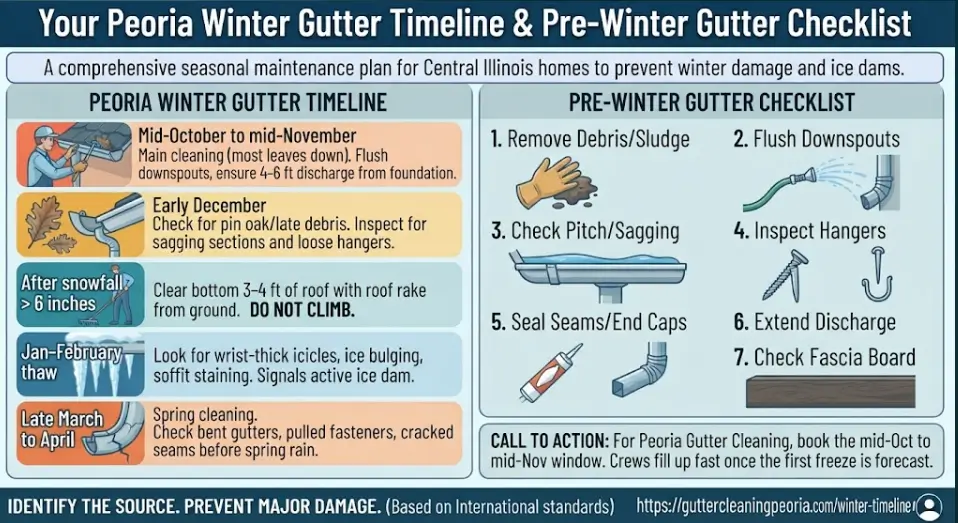
Pre-Winter Gutter Checklist
Walk the house before the ground freezes:
- Remove all debris from gutters, including the packed sludge at the low end.
- Flush every downspout with a hose. If water backs up, there’s a clog in the elbow or underground drain line.
- Look at the pitch. Standing water after a rinse means the gutter has sagged. It will freeze solid there.
- Check the hangers and fasteners. Spacing wider than about 24 inches, or spikes that have backed out, needs fixing before ice arrives.
- Inspect the seams and end caps for leaks. Small drips in fall become ice sheets in winter.
- Extend the downspout discharge. Ice at the bottom of a downspout can back water up into the gutter.
- Look at the fascia board. Soft, dark, or peeling wood means water has been getting behind the gutter already.
Small repairs like re-securing hangers and fixing a pulled downspout are much cheaper in October than after a February ice dam. The team at Gutter Cleaning Peoria can handle the cleaning and minor fixes in one visit.
Fix the Source: The Attic Work That Actually Stops Ice Dams
Gutter care reduces the damage, but heat loss creates the dam. If your roof leaks every winter, the fix is in the attic. Do these steps in order:
- Air seal first. Plug gaps around lights, pipes, chimney chases, and the attic hatch. Use fire-rated caulk or foam near flues.
- Then add insulation. Check the depth with a tape measure. ENERGY STAR publishes recommended R-values by climate zone, and Central Illinois homes generally need far more than older houses have. Adding insulation over unsealed leaks traps the problem and wastes money.
- Check ventilation. Soffit vents pull cold air in, and ridge vents let it out. Make sure insulation isn’t blocking the soffit openings. Use baffles to keep an air channel open.
- Vent exhaust fans outdoors. A bathroom fan that dumps into the attic adds heat and moisture right where you don’t want it.
- Seal attic ductwork. Leaky ducts pump warm air straight under the roof deck.
The ENERGY STAR guide to sealing and insulating your home walks through DIY air sealing and R-values, and Green Building Advisor explains why air sealing comes first in ice dam prevention.
What to Do When an Ice Dam Has Already Formed
Safe options:
- Use a roof rake from the ground to pull snow off the lowest few feet of the roof.
- Fill a nylon stocking with calcium chloride ice melt and lay it across the dam so it melts a channel. Rock salt can damage shingles, metal, and landscaping, so avoid it.
- Move belongings out from under any ceiling that’s dripping, and call for help.
- Run a box fan aimed at the ceiling to keep the attic side cold if you can safely reach it.
Don’t:
- Climb a ladder onto an icy roof.
- Chip at the ice with a hammer or shovel. You’ll tear the shingles and dent the gutters.
- Pour hot water on it. It refreezes.
- Ignore a drip because it stopped. Wet insulation loses its value and can grow mold.
Heat cables along the eaves can keep a drainage path open, but they treat the symptom. They work best on trouble spots after the attic has been fixed or as a stopgap.
Ballpark Costs: Prevention vs. Repair
These are rough ranges and vary by house size and contractor:
- Fall gutter cleaning and flush: usually the cheapest item on this list, and often bundled with minor repairs.
- Roof rake: about $30–$70.
- Heat cable kit: roughly $150–$500, more if you need an outlet added.
- Attic air sealing and added insulation: often in the low thousands, depending on attic size. It also lowers heating bills.
- Ice dam damage: ceiling drywall, wet insulation, paint, and shingle repairs can quickly run into the thousands. Replacing a gutter run pulled off by ice adds to that.
A few hundred dollars of maintenance in October costs far less than one wet ceiling.
Signs You Need Help Now
Call a professional if you see:
- Gutters visibly pulling away from the house
- Ice building thicker than 3–4 inches along the eaves
- Water stains on ceilings or upper walls
- Icicles forming only on some sections, which usually points to a local heat leak above
- Downspouts frozen shut
Serving the greater Peoria community, Gutter Cleaning Peoria helps homeowners get gutters flowing before the freeze. Book your fall service now and avoid the December rush: call [PHONE NUMBER] or visit guttercleaningpeoria.com.
Related Reading
- Learn more about seasonal gutter maintenance for Peoria homes. (Replace with your seasonal or spring cleaning post URL.)
- See our guide on how professional gutter cleaning protects your fascia and foundation. (Replace with the matching blog URL.)
Frequently Asked Questions
When should I clean my gutters in Peoria before winter?
Aim for mid-October to mid-November, after most leaves have fallen but before the ground freezes. If you have pin oaks, add a quick check in early December.
When should I clean my gutters in Peoria before winter?
Not by themselves. Ice dams come from heat escaping into the attic. But clogged gutters trap meltwater, freeze it in place, and make the dam heavier and more likely to leak into the house.
Do clogged gutters cause ice dams?
Not by themselves. Ice dams come from heat escaping into the attic. But clogged gutters trap meltwater, freeze it in place, and make the dam heavier and more likely to leak into the house.
How can I tell if I have an ice dam?
Look for a thick ridge of ice along the eaves, large icicles, water dripping behind the gutter, or stains on the ceiling near exterior walls.
Should I remove ice from my gutters in winter?
Only from the ground, and gently. Don’t chip or pry at ice, and don’t use a ladder on an icy day. Use a roof rake for snow and calcium chloride to open a drainage channel.
Are heat cables worth it?
They help on problem areas like valleys and north-facing eaves. They are a short-term fix. Sealing and insulating the attic is what stops the cause.
Does rock salt hurt gutters and shingles?
Yes. It can corrode metal, damage shingles, and kill plants below the drip line. Calcium chloride is a better choice, used sparingly.
Do gutter guards prevent ice dams?
No. Guards reduce leaf buildup but don’t stop ice from forming at the eaves. Small debris can still get through, and ice can push guards loose, so they still need periodic checks.
How much R-value does a Central Illinois attic need?
Check ENERGY STAR’s zone map for your county. Peoria falls in a cold climate zone where attics generally need a high R-value, and many older homes fall short. Air seal first, then add insulation.
What if my gutters are damaged after a cold snap?
Sagging sections, split seams, and pulled fasteners should be repaired before the next thaw. Ice-laden gutters that pull off the fascia can also damage soffits and siding below.
How often should gutters be cleaned in Peoria?
At least twice a year, in spring and late fall. Homes with silver maples, cottonwoods, or overhanging trees often need three or four cleanings.
Can I clean gutters myself in winter?
It’s not worth the risk. Ladders on icy ground and frozen debris make it dangerous. Schedule the work before the freeze, or wait for a professional to handle it safely.