
Clogged gutters cause more home damage in Peoria than most homeowners realize — foundation cracks, fascia rot, and basement flooding all start with water that had nowhere to go. This guide walks you through DIY gutter cleaning in Peoria step by step, covers the tools you’ll need, and tells you exactly when the job is no longer a weekend project. If you’d rather skip the ladder entirely, Gutter Cleaning Peoria handles the whole process safely and affordably.
Table of Contents
Quick Answer: How Often Should You Clean Your Gutters in Peoria?
Most Peoria homes need gutter cleaning twice a year — once in late spring after seed pods and maple helicopters drop, and again in late fall after leaves clear. Homes shaded by mature oaks or pines along the bluffs and near Peoria’s older neighborhoods often need a third cleaning in mid-winter to clear ice dams before they force water under the roofline.
What You’ll Need Before You Start
- Sturdy extension ladder rated for your weight plus tools (stabilizer/standoff recommended)
- Heavy-duty work gloves
- A small plastic gutter scoop or trowel
- A bucket or tarp for debris
- Garden hose with a spray nozzle
- Safety glasses
- A helper to hold the ladder (never do this alone)
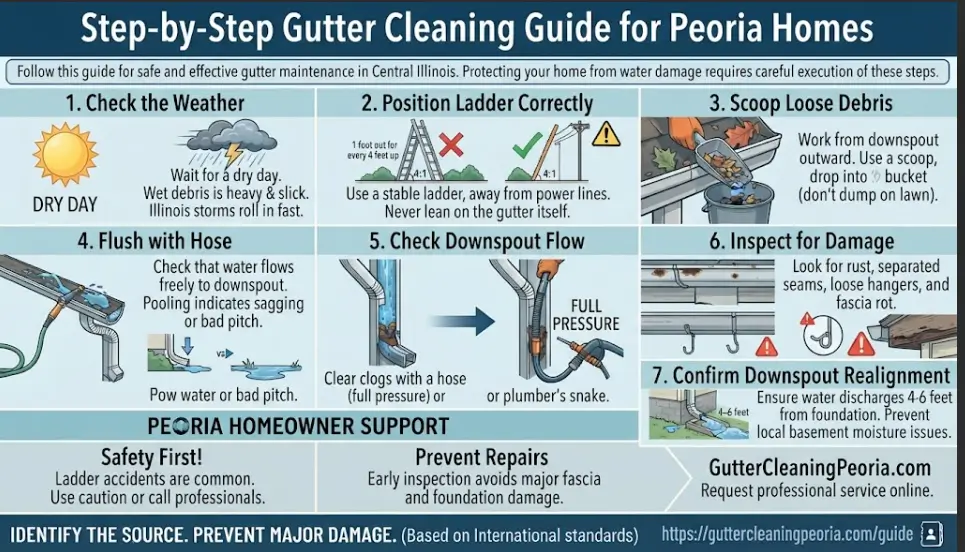
Step-by-Step Gutter Cleaning Guide for Peoria Homes
1. Check the weather first. Wait for a dry day — wet leaves and debris are heavier and slicker, and Illinois storms can roll in fast.
2. Position the ladder correctly. Set it on level ground at a 4:1 angle (one foot out for every four feet of height), away from power lines. Never lean it directly on the gutter itself; the aluminum can bend under your weight.
3. Scoop out loose debris. Work from the downspout outward, dropping leaves and grit into a bucket rather than the lawn below.
4. Flush the gutter with a hose. Start at the far end from the downspout and work toward it, checking that water flows freely rather than pooling — pooling water is an early sign of sagging gutters or improper pitch.
5. Check downspout flow. If water backs up, the downspout may be clogged. A plumber’s snake or a hose on full pressure aimed upward usually clears it.
6. Inspect for damage as you go. Look for rust spots, separated seams, loose hangers, and fascia board rot where the gutter meets the roofline — these are the early warning signs that lead to bigger repairs if ignored.
7. Confirm downspout realignment. Downspouts should direct water at least 4–6 feet away from your foundation. If yours dumps water right at the base of the house, extend it — this single fix prevents a huge share of local basement moisture complaints.
Local Factors That Affect Gutter Cleaning in Peoria
Peoria’s mix of mature tree canopy, river-valley humidity, and hard freeze-thaw winters puts extra strain on residential gutter systems compared to drier climates. Heavy spring storms off the Illinois River valley can dump an inch of rain in under an hour, and gutters already partly clogged from winter debris overflow almost immediately, pushing water toward fascia boards and siding. In neighborhoods with dense oak and silver maple cover, gutters can refill with debris within 60–90 days even after a full cleaning, which is why a lot of local homeowners space cleanings closer to quarterly rather than twice yearly.
Ladder Safety Tips Before You Climb
Falls from ladders are one of the most common causes of home DIY injuries, and gutter cleaning is a leading trigger. Before you climb, review the OSHA ladder safety guidelines — key points include maintaining three points of contact at all times, never standing on the top rung, and having someone spot the base of the ladder while you work. If your home is more than one story, or your roofline has a steep pitch, the risk-to-savings ratio of DIY work drops fast.
Common DIY Mistakes That Lead to Water Damage
- Skipping the downspout check — a clean gutter with a blocked downspout still overflows.
- Using a pressure washer on the gutter interior — it can bend thin aluminum or force debris further into the downspout.
- Ignoring small sags — even a slight dip collects standing water, adds weight, and accelerates hanger failure.
- Cleaning only the front-facing gutters — back and side runs facing tree lines clog fastest and get missed most often.
- Not checking the fascia board — soft, discolored wood behind the gutter usually means water has already been seeping in for months.
When to Call a Professional Gutter Cleaning Service in Peoria
DIY cleaning works fine for single-story homes with easy roof access and minor debris. Call a professional appliance—sorry, gutter cleaning company in Peoria — when you notice:
- Two-story or steep-pitch rooflines where ladder work is unsafe
- Visible sagging, separated seams, or pulled-away hangers
- Water stains on siding or fascia boards
- Standing water in the gutter after a flush test
- Ice buildup or ice dams in winter
- You simply don’t have the time to do it twice a year, every year
A professional gutter cleaning service can also spot early signs of roof or fascia damage that most homeowners miss, since technicians are up there every day rather than twice a year.

DIY vs. Professional Gutter Cleaning: Cost Comparison
| Factor | DIY | Professional |
|---|---|---|
| Time | 2–4 hours | 30–60 minutes |
| Equipment cost | $80–$200 (ladder, tools) | $0 (included) |
| Injury risk | Moderate to high | Low (trained crew) |
| Damage inspection | Basic, visual only | Trained diagnostic check |
| Frequency needed | Often underestimated | Scheduled to local tree/weather patterns |
For many Peoria households, the real cost of DIY isn’t the tools — it’s the missed damage that turns into a $2,000–$5,000 fascia or foundation repair down the road. Reducing runoff volume also matters for the broader neighborhood; Peoria’s stormwater program specifically notes that well-maintained gutters and downspouts directed away from impervious surfaces reduce strain on the city’s aging storm sewer system.
FAQs
How often should gutters be cleaned in Peoria, IL?
Twice a year at minimum — spring and late fall — with a third check mid-winter for homes near heavy tree cover or areas prone to ice dams.
Can I clean my gutters myself, or do I need a pro?
Single-story homes with easy roof access are generally fine for DIY. Two-story homes, steep rooflines, or any visible sagging call for professional gutter cleaning.
What’s the average cost of professional gutter cleaning near Peoria?
Pricing varies by home size and gutter length, but most Peoria homeowners can expect a lower cost than a single fascia or foundation repair caused by neglected gutters.
Do gutter guards eliminate the need for cleaning?
No. Gutter guards reduce debris buildup but don’t eliminate it — fine grit, seed pods, and shingle granules still collect and need periodic flushing.
What are the signs my gutters are already damaged?
Sagging sections, water marks on siding, pooling water after rain, and soft or discolored fascia boards are the clearest signs of existing damage.
Is it safe to clean gutters after it rains?
Wait until surfaces dry. Wet leaves are heavier and ladders are far more likely to slip on wet grass or pavement.
Does hard water or local water quality affect gutters?
Water quality has less impact on gutters than on appliances, but sediment carried in stormwater runoff can accelerate corrosion in older steel gutter systems.
When is the best time of year for gutter cleaning in Peoria?
Late April to early May and late October to mid-November line up best with Peoria’s tree-drop cycles and pre-winter storm season.