
Gutter Repair vs. Replacement in Peoria: How Long Should Your System Last?
Every Peoria homeowner eventually asks the same question: is this gutter problem a quick fix, or is it time to replace the whole system? The answer depends on material age, damage type, and how much freeze-thaw stress your gutters have absorbed over the years. Understanding gutter repair vs. replacement in Peoria before you call a contractor saves money and prevents you from paying twice—once for a patch job, then again for a full system a year later
This guide breaks down realistic lifespans by material, the specific warning signs that separate a repair from a replacement, and how central Illinois weather accelerates wear that homeowners in milder climates rarely deal with.
Table of Contents
Quick Answer: When Should You Repair vs. Replace Gutters in Peoria?
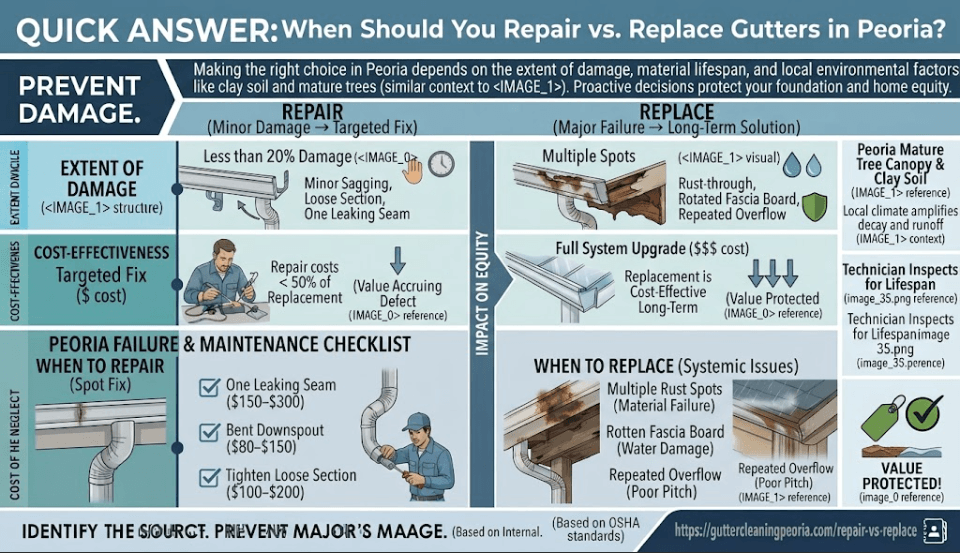
If less than 20% of your gutter run shows damage—minor sagging, a loose section, one leaking seam, or a bent downspout—repair is almost always the right call. If you’re seeing rust-through in multiple spots, fascia board rot behind the gutter line, or repeated overflow despite cleaning, replacement is the more cost-effective long-term decision. As a rule of thumb, if repair costs exceed 50% of full replacement, most contractors recommend replacing the system outright.
Average Gutter Lifespan by Material
Not all gutters age the same way, and material choice matters more in Peoria’s climate than in most parts of the country.
- Aluminum (sectional): 20–25 years, but seam joints fail earlier and need periodic resealing
- Seamless aluminum: 25–30 years with far fewer leak points since there are no seams along the run
- Vinyl: 10–15 years; vinyl becomes brittle in sub-zero temperatures and cracks under ice weight
- Galvanized steel: 15–20 years before rust compromises the metal
- Copper: 50+ years, though the upfront cost is significantly higher
Homes built before the early 2000s in neighborhoods around the West Bluff and Peoria Heights often still have original steel or sectional aluminum gutters, which puts many of them well past the point where repair still makes financial sense.
How Peoria’s Climate Shortens Gutter Lifespan
Central Illinois puts gutters through more stress than warmer regions. Winters bring repeated freeze-thaw cycles that force ice into seams and fastener holes, widening them slightly with every cycle. Spring storms then dump heavy rain volume fast, testing every weak point the ice already loosened. Add in the mature oak and maple canopy found throughout many Peoria neighborhoods, and gutters here accumulate debris load that thinner residential systems weren’t designed to handle season after season.
This combination is why a gutter rated for 20–25 years in a moderate climate might realistically only make it 15–18 years in Peoria without a mid-life tune-up.
Signs You Need Repair, Not Replacement
These issues are typically isolated and fixable without tearing out the whole system:
- A single sagging section caused by loose or pulled hangers
- One or two seams leaking during heavy rain
- A downspout that’s separated or needs downspout realignment after storm impact
- Minor pitch issues causing standing water in one section
- Small holes or pinhole rust spots that haven’t spread
A skilled technician can usually resolve these in a single visit, often for a fraction of replacement cost.
Signs You Need Full Replacement
These point to system-wide failure rather than a localized problem:
- Rust or corrosion visible along multiple sections, not just one spot
- Fascia board rot behind the gutter line, indicating water has been getting behind the system for a while
- Gutters pulling away from the roofline in several places at once
- Cracking or splitting vinyl material that’s become brittle with age
- Soffit damage or staining suggesting chronic overflow
- Paint peeling or bubbling on siding below the gutter line
If you’re seeing two or more of these at once, patchwork repair usually just delays a bigger bill.
Repair vs. Replace: A Simple Cost Framework
Rather than quoting fixed numbers that vary by home size and material, use this framework: get a diagnostic assessment that separates the cost of repairing only the damaged sections versus a full tear-off and reinstall. If the repair estimate lands anywhere near half of what full replacement would cost, replacement is the smarter investment since it resets your maintenance clock and typically comes with a warranty the patched sections won’t have.
Best Time of Year to Schedule Gutter Work in Peoria
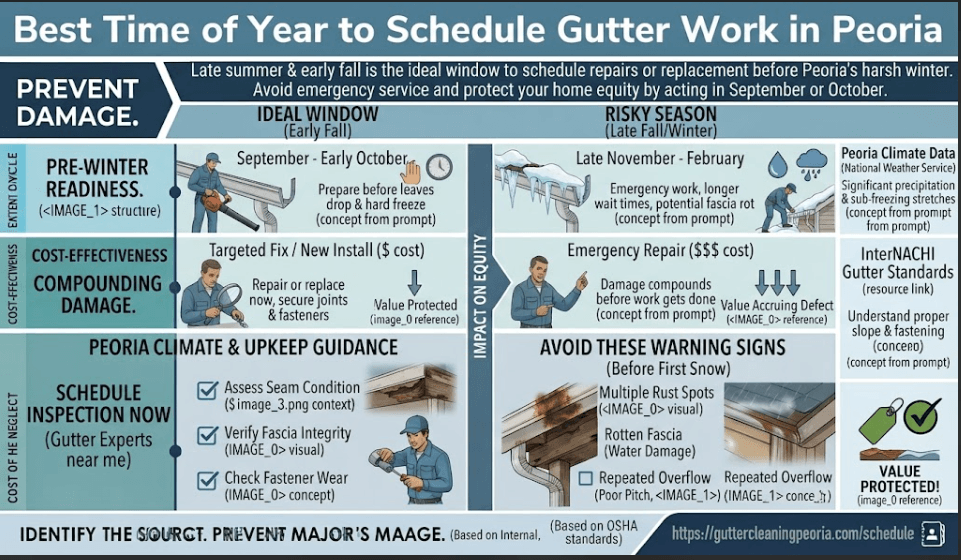
Late summer and early fall—before leaves drop and before the first hard freeze—is the ideal window. Scheduling repair or replacement in September or early October means your system is ready before winter ice starts testing every joint and fastener. Waiting until after the first snow often means longer wait times and higher risk of additional cold-weather damage before the work gets done.
For homeowners weighing this decision right now, a professional inspection is the fastest way to know which category your gutters fall into. Our team at gutter cleaning and repair experts serving Peoria can assess seam condition, fascia integrity, and fastener wear in one visit and give you a straight answer instead of an upsell.
According to the National Weather Service Peoria climate data, central Illinois averages significant year-round precipitation combined with regular sub-freezing stretches—conditions that directly explain why gutter systems here wear faster than national averages suggest. For general system upkeep guidance, the InterNACHI gutter maintenance resource is a solid reference for homeowners who want to understand proper slope and fastening standards.
If your gutters are showing multiple warning signs at once, don’t wait for a spring storm to make the decision for you. Reach out to the Peoria gutter cleaning services near me for a straightforward repair-or-replace assessment before winter sets in.
Frequently Asked Questions
How long do seamless aluminum gutters last in Peoria?
Seamless aluminum typically lasts 25–30 years in this climate, longer than sectional systems because there are fewer joints for ice and debris to work loose over time.
Can I repair just one section of gutter instead of the whole system?
Yes, as long as the damage is isolated. Technicians can replace or reseal individual sections without disturbing the rest of the run, provided the fascia board behind it is still solid.
What’s the 50% rule for gutter replacement?
It’s a general guideline stating that if repair costs approach or exceed half the price of full replacement, replacement delivers better long-term value since it comes with fresh materials and typically a warranty.
Do gutter guards extend the lifespan of my system?
Gutter guards reduce debris buildup, which lowers the weight stress on hangers and fasteners. They don’t stop aging, but they can meaningfully reduce the frequency of clogs that lead to overflow damage.
How does hard freeze-thaw weather affect gutter fasteners?
Repeated freezing and thawing causes trapped water to expand and contract inside seams and screw holes, gradually loosening fasteners and widening small leaks into larger ones over several winters.
Is fascia board rot always a sign I need new gutters?
Not always, but it does mean water has been getting behind the gutter system for some time. In many cases, both the rotted fascia section and the gutter above it need replacement together.
How often should Peoria homeowners have their gutters inspected?
Twice a year is standard—once in late fall after leaves drop, and once in spring after the last freeze—to catch small problems before they turn into fascia or foundation issues.
Does homeowners insurance cover gutter replacement?
It depends on the cause. Storm or wind damage is often covered, while gradual wear from age typically isn’t. Check your policy specifics or ask your adjuster during a claim.