
Emergency gutter repair Peoria homeowners need can become urgent when gutters suddenly pull away from the roof, overflow during heavy rain, or develop serious leaks. A scheduled gutter cleaning may be enough for routine maintenance, but damaged gutters can quickly cause water to reach the fascia, siding, foundation, and landscaping. Knowing the warning signs and when to call for emergency gutter repair can help Peoria homeowners prevent more expensive water damage.
Table of Contents
Quick Answer: What Counts as an Emergency Gutter Repair in Peoria?
An emergency gutter repair in Peoria is any situation where water is actively bypassing your gutter system and threatening your home’s siding, foundation, or landscaping. This includes gutters pulling away from the fascia, sections that have collapsed under ice or debris weight, and downspouts that have separated during high winds. If water is dumping directly onto your foundation instead of routing away from it, that’s an emergency, not a maintenance item.
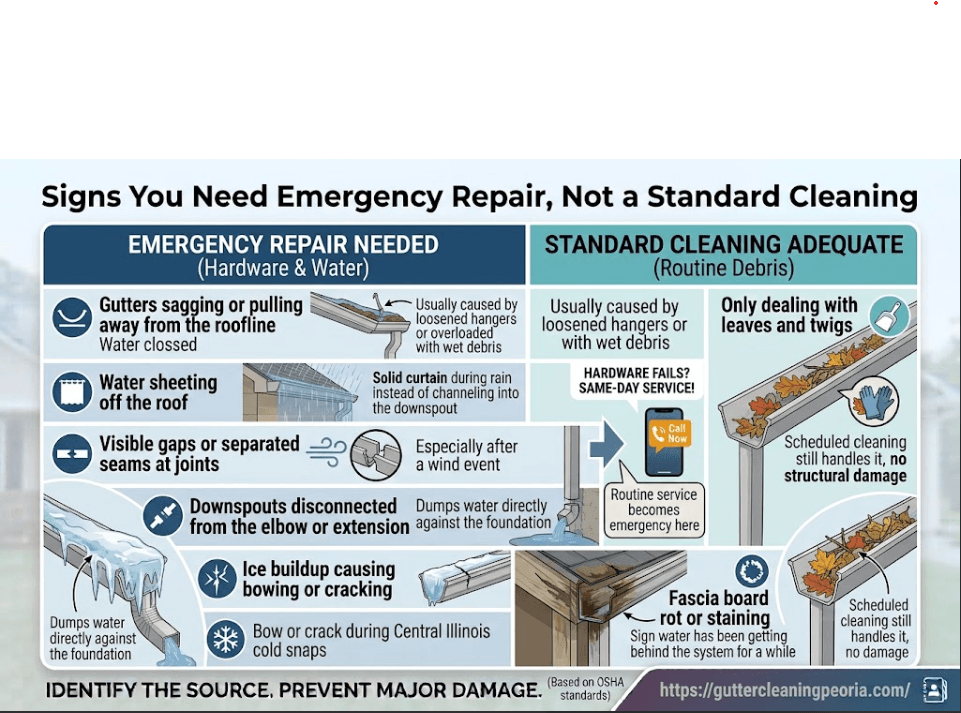
Signs You Need Emergency Repair, Not a Standard Cleaning
Not every clogged gutter is a crisis. Here’s how to sort urgent damage from routine buildup:
- Gutters sagging or pulling away from the roofline — usually caused by loosened hangers or a section overloaded with wet debris
- Water sheeting off the roof in a solid curtain during rain instead of channeling into the downspout
- Visible gaps or separated seams at joints, especially after a wind event
- Downspouts disconnected from the elbow or extension, dumping water directly against the foundation
- Ice buildup causing a gutter to bow or crack during Central Illinois cold snaps
- Fascia board rot or staining where the gutter meets the roofline, a sign water has been getting behind the system for a while
If you’re only dealing with leaves and twigs sitting in the trough with no structural damage, a scheduled cleaning still handles it. Once hardware fails or water starts finding a new path, it’s time for same-day service.
Common Causes of Gutter Emergencies in Peoria
Peoria’s weather pattern plays a direct role in why gutters fail without warning. Local climate data shows May is typically the wettest month of the year here, with heavy spring storm systems capable of dropping well over an inch of rain in a single afternoon. That kind of rapid volume overwhelms a gutter system that’s even slightly clogged or misaligned, and it’s often when homeowners discover a failure they didn’t know was coming.
Winter brings its own risk. Freeze-thaw cycles common to Central Illinois cause standing water in a gutter to expand, which can crack seams, pull spikes loose, or split a downspout at the joint. Combine that with mature trees dropping heavy wet leaf loads in fall, and it’s easy to see why gutter emergencies in Peoria cluster around spring storms and winter freezes.
What Happens If You Ignore an Overflowing or Detached Gutter
Delaying emergency gutter repair rarely saves money. Water that isn’t routed away from your home tends to find the path of least resistance, and that path usually runs straight through your fascia board, siding, or foundation. Left alone, an overflowing gutter can lead to:
- Fascia board rot that spreads into the roof deck
- Basement or crawlspace water intrusion from foundation splash-back
- Soil erosion and mulch washout in landscaping beds
- Mold growth in wall cavities from prolonged moisture exposure
- Ice dam formation that can force water under shingles
A downspout realignment or a quick fascia bracket replacement is a fraction of the cost of repairing water-damaged framing or a compromised foundation later.
DIY Temporary Fixes vs. Calling a Professional
There are a few things a homeowner can safely do while waiting for a technician, and a few that are better left alone:
Reasonably safe to try:
- Clear visible debris from the gutter opening using a scoop from a stable ladder
- Redirect a loose downspout extension away from the foundation temporarily
- Place a tarp or bucket under a leaking joint to limit interior water intrusion until help arrives
Leave to a professional:
- Reattaching gutter sections to fascia that’s already showing rot
- Working on a ladder during active rain or high wind
- Any repair involving a second-story roofline or steep pitch
- Compressor or structural diagnosis where the gutter has pulled hardware out of the wood
If the fix requires re-hanging a section, sealing a seam under pressure, or working at height in bad weather, it’s not a DIY afternoon project. That’s when same-day appliance-style urgency applies to your gutter system too.
How Fast Should You Respond?
As a general rule, any active water intrusion into the home should get a call within 24 hours. Structural sagging or detachment without active leaking can usually wait for next-day service, but shouldn’t sit for more than a few days, especially with more rain in the forecast. A quick way to check your local forecast risk before deciding is the National Weather Service Central Illinois office, which covers Peoria-area storm and precipitation outlooks.
Preventing Future Gutter Emergencies in Peoria
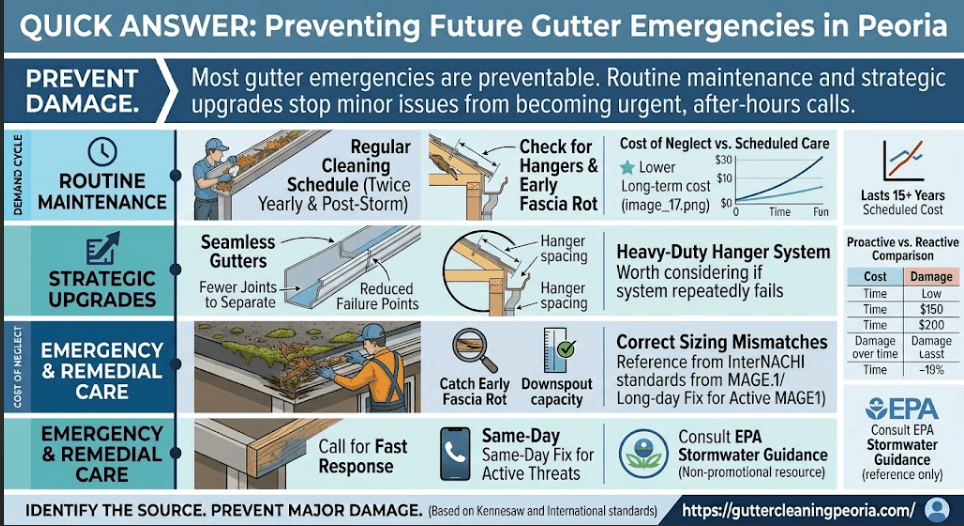
Most gutter emergencies trace back to a maintenance gap. A regular cleaning schedule, ideally twice a year and after major storms, keeps debris load down and lets a technician catch loose hangers or early fascia rot before they become an after-hours call. Seamless gutters also reduce the number of joints that can separate under stress, which is worth considering if your current system fails repeatedly in the same spot.
For homeowners who want a deeper dive into gutter system upkeep and material choices, the EPA’s guidance on managing stormwater at the residential level is a solid, non-promotional resource on how proper drainage protects a property long-term.
Whether it’s a scheduled cleaning or a same-day fix, our team provides emergency gutter repair in Peoria for homeowners who can’t wait for a standard appointment. We serve the greater Peoria community with fast response times when water is actively threatening your home.
Frequently Asked Questions
How quickly can gutter damage cause water damage to my home?
It depends on volume and where the water is escaping, but during a heavy spring storm, a detached downspout can direct hundreds of gallons toward your foundation in a single event. Damage to siding or landscaping can start within hours; foundation or basement issues typically take repeated exposure but can happen fast if the ground is already saturated.
Is emergency gutter repair more expensive than a scheduled visit?
Same-day or after-hours service usually carries a modest premium over a scheduled cleaning, but it’s almost always cheaper than repairing fascia rot, foundation cracking, or interior water damage that results from delaying the fix.
Can I patch a gutter myself until a technician arrives?
Minor debris clearing and redirecting a loose downspout away from the foundation are reasonable temporary steps. Ladder work in bad weather, height-related repairs, or reattaching hardware to already-rotted fascia should wait for a professional.
What’s the difference between a gutter repair and a full replacement?
Repair addresses a specific failure point — a seam, hanger, or downspout section. Replacement is usually recommended when multiple sections show corrosion, repeated seam failures, or when the fascia behind the system needs extensive rebuilding.
Does Peoria’s weather make gutter emergencies more common than other regions?
Central Illinois sees a combination of heavy spring rainfall and hard winter freeze-thaw cycles, both of which stress gutter hardware more than a milder, drier climate would. That combination is why local homeowners tend to see more sudden failures around March through May and again during winter cold snaps.
How do I know if it’s a clog or a structural failure?
A clog usually shows as water pooling in the trough or overflowing evenly along a section. A structural failure looks different — sagging, visible gaps at the fascia, or a section that’s physically pulled away from the roofline. Structural issues need repair, not just cleaning.
Should I call for gutter repair during an active storm?
Report the issue so a technician can prioritize your job, but actual ladder work should wait until wind and rain subside for safety reasons. In the meantime, redirect water away from the foundation with a temporary extension if it’s safe to do so at ground level.