
Trees That Cause Gutter Buildup can create serious maintenance problems for homeowners in Peoria. Leaves, pine needles, seeds, flowers, and other debris can quickly collect inside your gutters, causing clogs, overflowing water, and potential damage to your home. Identifying which trees around your property create the most debris can help you plan regular gutter cleaning and maintenance.. Peoria’s mature tree canopy — heavy on silver maples, oaks, and cottonwoods — drops seeds, leaves, and debris almost year-round, and each species clogs a gutter system differently. Knowing which trees on your property are the worst offenders helps you plan smarter maintenance and avoid emergency gutter cleaning in Peoria after a storm backs up your downspouts.
Table of Contents
Quick Answer: Which Trees Clog Gutters the Most in Peoria?
Silver maples, cottonwoods, sweetgums, and pin oaks cause the most gutter buildup in the Peoria area. Silver maples shed seed pods (samaras) in late spring and leaves in fall, cottonwoods drop cottony seed fluff that mats with debris, sweetgums produce spiky seed balls that jam downspout openings, and pin oaks release small leaves and acorns that decompose into a paste-like sludge. Homes with two or more of these species nearby typically need gutter cleaning three to four times a year instead of the standard twice-annual schedule.
Silver Maple: Peoria’s Most Common Gutter Offender
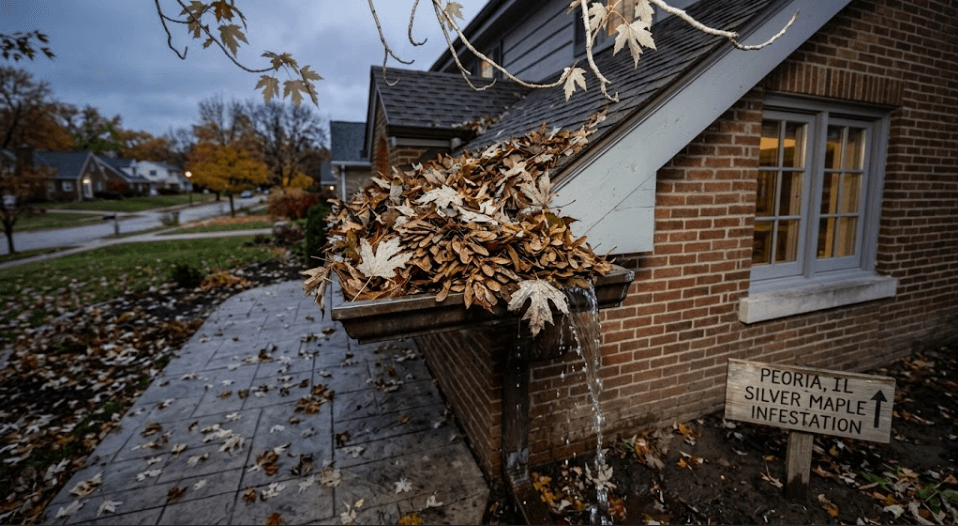
Silver maple is one of the most widely planted shade trees across central Illinois, and it’s also one of the messiest. In late spring, silver maples release thousands of winged seed pods that spin into gutters and pack tightly against downspout screens. By fall, the same trees drop broad, thin leaves that layer on top of the seed debris and hold moisture against the fascia board. That combination accelerates fascia board rot if the buildup isn’t cleared before winter freeze-thaw cycles set in.
Cottonwood and Sweetgum: Fluff and Spiky Seed Balls
Cottonwood trees release seed fluff in early summer that looks harmless blowing across a lawn but turns into a felt-like mat once it lands in a wet gutter channel. That mat traps grit and shingle granules, creating a dense clog that water can’t push through. Sweetgum trees are worse for downspout realignment issues — their spiky seed balls (gumballs) are just wide enough to lodge inside downspout elbows, causing water to back up and overflow at the seams even when the gutter trough itself looks clear.
Oak Trees: Slow-Release Buildup That’s Easy to Miss
Pin oaks and red oaks are common in older Peoria neighborhoods, and their small leaves and acorn caps don’t look like much debris at first glance. The problem is decomposition speed. Oak leaves break down into a compact, dark sludge faster than maple leaves, and that sludge settles at the low point of the gutter run, right where it can seep into seams and accelerate corrosion in older aluminum systems.
Evergreens: Year-Round Needle Drop
Pines and spruces don’t shed dramatically in one season the way deciduous trees do, but they drop needles steadily all year. Needles slip through standard gutter guards more easily than broad leaves and accumulate slowly, which means homeowners often don’t notice the buildup until a downspout is already blocked.
Peoria’s Weather Makes Tree Debris Worse
Central Illinois gets a mix of heavy spring storms, humid summers, and hard fall leaf drop compressed into a short window — often just a few weeks in October and November. When several inches of rain hit gutters already loaded with maple seed pods or sweetgum balls, the combination overflows onto fascia boards and can drive water toward the foundation. Winter freeze-thaw cycles then expand any trapped moisture, warping gutter seams that were fine in the fall. This is why local homeowners get more value from a fall inspection paired with routine gutter cleaning in Peoria than from a single spring cleanout.
Signs Your Gutters Are Already Clogged
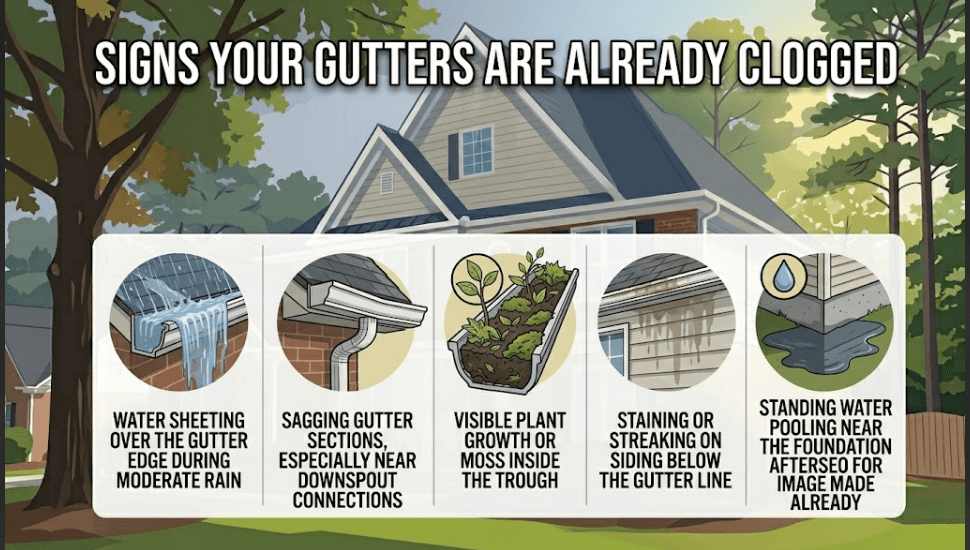
- Water sheeting over the gutter edge during moderate rain
- Sagging gutter sections, especially near downspout connections
- Visible plant growth or moss inside the trough
- Staining or streaking on siding below the gutter line
- Standing water pooling near the foundation after rain
DIY Cleaning vs. Calling a Professional
Clearing a light layer of oak leaves from a single-story home is a reasonable DIY task with the right ladder safety setup. But dense buildup from silver maple seed pods, packed sweetgum balls, or multi-season cottonwood fluff usually needs to be removed by hand from inside the downspout, not just scooped from the trough — and that’s where most DIY attempts fall short. A professional visit also catches early water damage or a loose downspout realignment need before it turns into a bigger repair.
For homes with two or more heavy-shedding trees nearby, scheduling with a team that provides seamless gutters and knows the local tree patterns saves repeat callbacks. If you’re unsure how often your specific yard needs service, Gutter Cleaning Peoria can walk through your tree coverage and set a realistic seasonal schedule instead of guessing.
A Simple Seasonal Checklist
- Late spring: Clear silver maple seed pods before summer storms arrive.
- Midsummer: Check downspouts for cottonwood fluff mats after a dry spell.
- Early fall: Remove any early oak or sweetgum drop before the main leaf fall.
- Late fall: Do a full cleanout after 90% of leaves have dropped, not before.
- Winter: Inspect for ice dams if evergreen needle buildup was left in place.
For general reference on tree drop timing in the Illinois region, the Morton Arboretum’s tree and plant guides break down seasonal shedding by species, which can help you match this checklist to the specific trees on your property. Homeowners dealing with heavier yard debris in general can also check the City of Peoria’s yard waste guidelines for proper disposal of cleared material.
FAQs
How often should I clean my gutters if I have silver maples nearby?
Three to four times a year — once after the spring seed pod drop, once in midsummer, and twice during the fall leaf season — is typical for homes with mature silver maples overhead.
Do gutter guards stop tree debris completely?
No guard is fully maintenance-free. Standard mesh guards block large leaves but let pine needles, small oak leaves, and cottonwood fluff through, so guarded gutters still need periodic checks, just less often than uncovered ones.
Which Peoria-area tree causes the worst downspout clogs specifically?
Sweetgum seed balls are the most common cause of downspout-specific clogs because their shape wedges tightly inside the downspout elbow rather than staying in the trough where it’s easier to clear.
Can clogged gutters actually damage my roof or foundation?
Yes. Overflowing water from a clogged trough can seep under roof edges and shingles, and repeated overflow at the same spot near the foundation increases the risk of basement moisture and settling over time.
Is it worth removing a tree just to stop gutter buildup?
Rarely necessary. Adjusting your gutter cleaning in Peoria schedule to match your specific tree species usually costs far less than removing an otherwise healthy mature tree.
What time of year is the worst for gutter buildup in Peoria?
Late October through mid-November, when oak, maple, and sweetgum leaf drop overlaps with the season’s heavier rainfall, causes the most overflow calls in the Peoria area.
Should I clean gutters before or after all the leaves fall?
Wait until at least 90% of leaves have dropped from the trees directly overhead. Cleaning too early just means doing the job twice.