
Peoria winters push gutters past their limit. Once temperatures drop below freezing for days at a stretch, standing water in a clogged gutter turns to ice, and that ice doesn’t stay put — it pushes up under the shingle line and pulls fascia boards away from the roof deck. If you’ve noticed peeling shingles, dark water stains on your ceiling, or ice hanging in thick sheets off the roofline, frozen gutters in Peoria are likely the root cause, not just a cosmetic winter nuisance.
Table of Contents
What Are Frozen Gutters and Why Do They Damage Shingles?
Quick Answer: Frozen gutters damage roof shingles because trapped ice expands and forms a dam at the roofline, forcing melting snow to back up under the shingles instead of draining off the roof. That backed-up water seeps into the roof deck, soaks the underlayment, and causes shingle curling, granule loss, and interior leaks — often before a homeowner notices anything wrong from the ground.
This process is called an ice dam. It starts small: a gutter clogged with fall leaves holds water instead of draining it. When the first hard freeze hits, that water turns solid. Snow melting off the warmer upper roof runs down and hits the ice blockage, pools, and refreezes in layers. Each freeze-thaw cycle pushes the ice further under the shingle edge until water finds a gap and drips into the attic or exterior wall cavity.
The Chain Reaction: From Clogged Gutter to Roof Damage
A frozen gutter rarely damages a roof on its own — it’s the starting point of a chain reaction:
- Debris buildup blocks normal water flow through the gutter and downspout.
- Standing water freezes solid during the first sustained cold snap, usually mid-December through February in the Peoria area.
- Ice dams form at the gutter line, growing thicker with every freeze-thaw cycle.
- Shingles lift and curl as trapped water works underneath them, breaking the seal that keeps the roof watertight.
- Fascia board rot sets in where ice repeatedly saturates the wood behind the gutter.
- Water intrusion reaches the attic insulation, drywall, or exterior siding, showing up as stains, mold, or peeling paint weeks after the actual freeze.
Signs Your Gutters Have Already Caused Shingle Damage
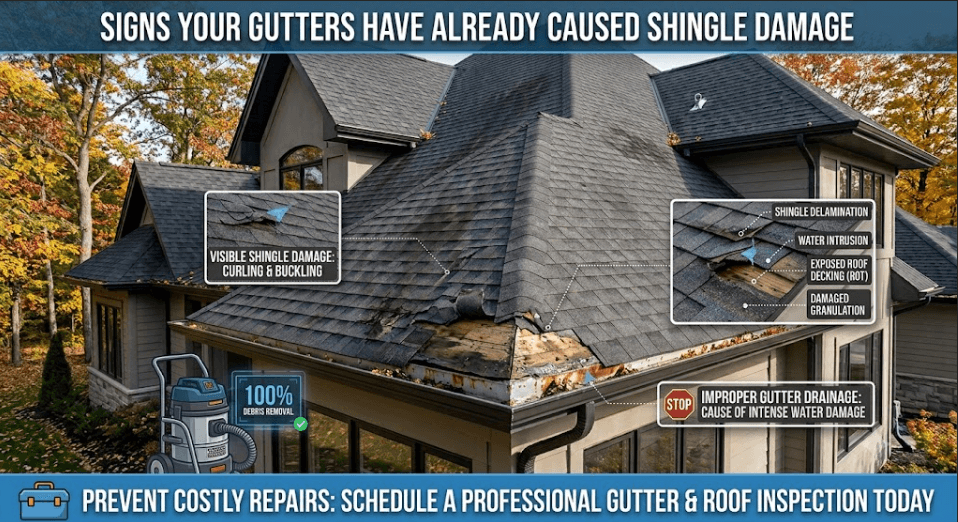
- Granules collecting in the gutter trough or at downspout outlets (a sign shingles are breaking down)
- Icicles thicker than a few inches hanging directly off the roof edge
- Sagging gutter sections pulling away from the fascia board
- Brown or yellow ceiling stains near exterior walls after a thaw
- Shingles that look lifted, curled, or missing near the eaves
Why Peoria’s Climate Makes This Worse
Peoria sits in a freeze-thaw zone where daytime highs can climb above freezing while nights drop well below it — sometimes within the same 24-hour window. That constant cycling is harder on gutters and roofs than a climate that stays consistently cold. Illinois winters regularly bring heavy wet snow followed by brief warm-ups, which is the exact pattern that builds ice dams fastest. Homes with poor attic ventilation are especially vulnerable, since escaping heat melts roof snow unevenly and feeds the ice dam from above even when outdoor temperatures stay low.
Downspout Realignment and Drainage: The Fix Before the Freeze
Most ice dam damage traces back to a drainage problem that existed long before winter. Downspout realignment — correcting downspouts that have shifted, disconnected, or been crushed by lawn equipment — restores proper water flow so gutters empty fully instead of holding a few inches of standing water. Combined with a full debris clean-out, this is the single most effective way to prevent the freeze-thaw cycle from starting in the first place. Seamless gutters, which have fewer joints prone to leaking or catching debris, also reduce the odds of a localized blockage turning into a full ice dam.
A licensed roofer can confirm whether attic insulation or ventilation is contributing to unenven roof-surface melting, but the gutter side of the equation — clearing debris, correcting slope, and fixing loose fasteners — needs to happen before the first freeze, not after ice has already formed.
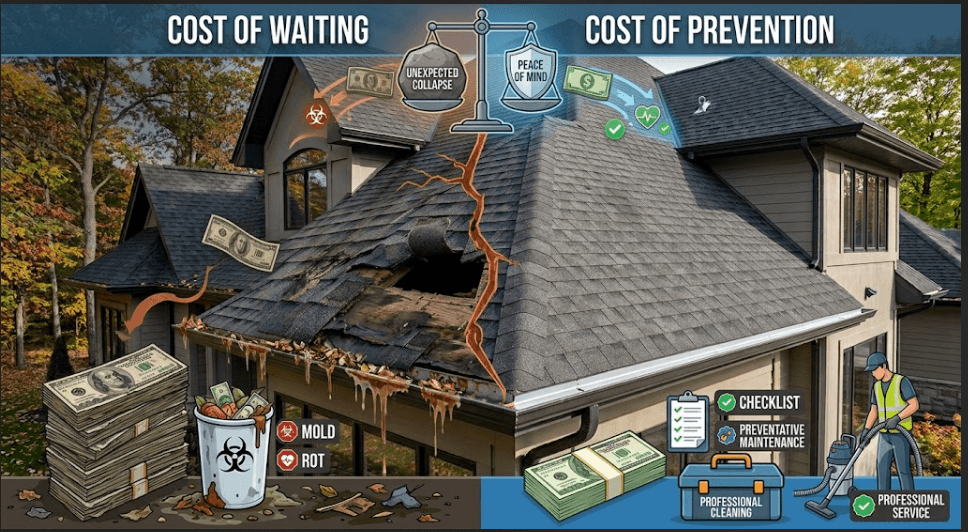
Cost of Waiting vs. Cost of Prevention
| Issue | Preventive Fix | Cost if Ignored |
|---|---|---|
| Clogged gutters | Seasonal cleaning | Ice dam formation, shingle lift |
| Misaligned downspout | Downspout realignment | Fascia board rot, foundation water pooling |
| Sagging gutter hangers | Hanger replacement | Full gutter section replacement |
| Minor shingle lift | Roofer inspection | Attic insulation damage, interior drywall repair |
Preventive gutter maintenance typically costs a fraction of what shingle replacement, fascia repair, or interior water damage restoration runs once an ice dam has already formed.
If your gutters haven’t been cleaned since fall, or you’re already seeing icicles building up along the roofline, get ahead of it now. Our team provides gutter cleaning in Peoria and downspout repair for homeowners across the greater Peoria community, with same-week scheduling before the next freeze hits. You can also see our full range of Peoria gutter maintenance services or reach out directly for a fast quote.
For additional guidance on attic ventilation’s role in ice dam prevention, the U.S. Department of Energy’s home weatherization resources outline how insulation and airflow affect roof-surface melting patterns.
Frequently Asked Questions
Can frozen gutters really damage a roof, or is it just the gutters at risk?
Frozen gutters put shingles, fascia boards, and even interior ceilings at risk. The ice dam that forms at the gutter line forces water back under the shingle line, which is where most of the real damage happens — not in the gutter itself.
How can I tell if I already have an ice dam?
Look for a thick ridge of ice along the lower edge of the roof, icicles hanging in a continuous row, or water stains appearing on interior ceilings near exterior walls during a thaw.
Is it safe to remove ice dams myself?
Chipping at ice on a roof edge can crack shingles or cause a fall injury. A calcium chloride sock laid across the dam can create a channel for water to drain, but full removal and gutter repair is safer left to a professional with the right equipment.
Will cleaning my gutters in fall actually prevent ice dams in Peoria?
Yes. A clean, properly sloped gutter with a working downspout drains water before it has a chance to freeze, which removes the starting point for most ice dams.
How often should gutters be cleaned to avoid freeze damage?
Twice a year is standard for most Peoria homes — once in late spring after seed pods and blossoms drop, and again in late fall after leaves have finished falling, ahead of the first hard freeze.
Does gutter guard installation eliminate the risk of ice dams?
Gutter guards reduce debris buildup but don’t prevent ice dams caused by poor attic ventilation or heavy snow load. They work best as part of a broader maintenance plan, not as a standalone fix.
What’s the difference between an ice dam and a normal icicle?
A few small icicles are common and usually harmless. An ice dam is a thick, continuous ridge of ice that traps water behind it, which is the version that leads to shingle and interior damage.
Can frozen gutters cause damage even in a mild Peoria winter?
Yes. It only takes one or two freeze-thaw cycles with clogged gutters to start an ice dam — a mild winter with fluctuating temperatures can actually create more freeze-thaw cycles than a consistently cold one.