
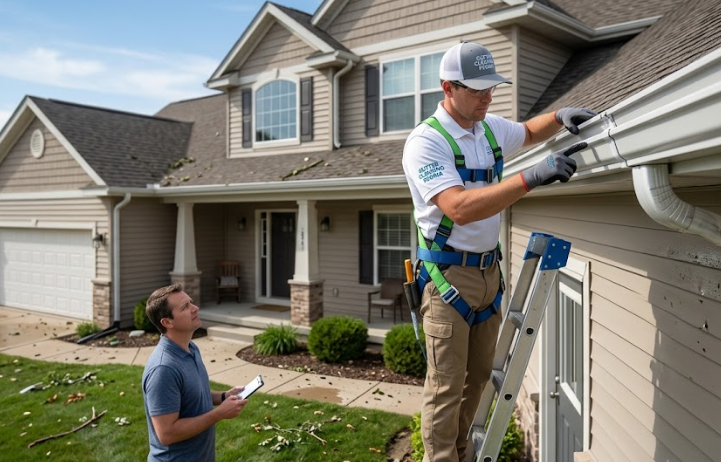
Central Illinois storm season runs hard from May through August, and Peoria takes its share of high wind, hail, and torrential downpours nearly every summer. A thorough gutter inspection in Peoria after any severe weather event is the fastest way to catch damage before it turns into a foundation, siding, or roof problem. This guide walks through exactly what to check, what counts as storm damage versus normal wear, and when it’s time to call in a professional.
Table of Contents
How Do I Inspect My Gutters After a Storm in Peoria?
Walk the perimeter of your home after any storm with wind gusts over 40 mph, hail, or heavy rain. Look for sagging sections, pulled-away brackets, hail-impact dents, granules from asphalt shingles collecting in the trough, and water stains on the siding below the gutter line. Check that downspouts are still attached and that they drain at least 4-6 feet away from the foundation. If you see standing water in the gutter after the rain stops, a clog or a pitch problem needs attention before the next storm rolls through.

Why Peoria Storms Are Especially Hard on Gutters
Peoria sits in a corridor that regularly sees straight-line wind events and severe thunderstorm cells moving off the Illinois River valley. These storms bring three specific threats to gutter systems:
- Straight-line wind gusts that can exceed 60 mph, strong enough to peel gutters away from fascia boards or twist end caps loose
- Hail impact, which dents aluminum gutters and can crack vinyl sections, weakening the seams over time
- Sudden, heavy rainfall that overwhelms undersized or clogged systems in minutes rather than hours, causing overflow before you even notice a problem
The National Weather Service’s Central Illinois office tracks severe thunderstorm and high wind warnings for Peoria County, and residents can sign up for alerts to know when a storm strong enough to cause gutter damage is headed this way.
Gutter Inspection in Peoria: Storm Damage Checklist
Work through this list within 24-48 hours of any severe weather:
- Sagging or pulling gutters — Look for sections dipping away from the roofline. This usually means brackets or hangers have loosened from wind stress.
- Hail dents and cracks — Aluminum gutters dent easily under hail; vinyl and older galvanized steel can crack at the seams.
- Detached downspouts — Check where downspouts meet the gutter and where they meet the ground extension. Wind often separates these joints first.
- Granule buildup — A sudden increase in dark granules in the trough usually points to roof shingle damage from the same storm, not just gutter debris.
- Fascia board rot or separation — If the gutter pulled away, inspect the fascia board behind it for water damage or soft, spongy wood.
- Pooling water in the yard — Puddling near the foundation after downspouts should have drained clear points to a blocked or crushed downspout extension.
- Overflow staining on siding — Streaks or dark stains below the gutter line are a sign of overflow during the storm, which usually means a clog or improper pitch.
Downspout Realignment After Wind Events
Downspouts take the brunt of straight-line wind damage because they’re the least secured part of the system. A downspout knocked loose or crushed at the elbow will redirect water straight down the foundation wall instead of away from the house. This is one of the most common causes of basement seepage in older Peoria neighborhoods with clay or limestone foundations. Realigning and resecuring downspouts is usually a quick fix, but it needs to happen before the next heavy rain, not after.
When Storm Damage Becomes a Water Damage Problem
Gutters that overflow or detach during a storm rarely cause damage in a single event — the real cost shows up after two or three storms of water running down the same spot on the fascia or foundation. Left unaddressed, this leads to:
- Fascia board rot that requires carpentry repair, not just a gutter fix
- Basement or crawlspace moisture intrusion
- Soil erosion and mulch washout along the foundation line
- Ice-related cracking the following winter, since damaged joints trap more water
Catching the damage during a post-storm inspection is significantly cheaper than repairing water intrusion later. The FEMA flood and water damage prevention guidance covers how proper drainage around a home’s perimeter reduces water intrusion risk, which starts at the gutter and downspout system.

Seasonal Maintenance Tip: Pre-Storm vs. Post-Storm Checks
Peoria homeowners get the best protection by inspecting gutters twice around each storm event — once before the season ramps up in late spring to clear winter debris, and again after any severe weather to catch new damage. A pre-storm cleaning removes leaves, seed pods, and debris that would otherwise trap water and add stress to brackets during high wind. A post-storm check catches physical damage the wind and hail caused directly.
For homeowners who don’t want to climb a ladder after every thunderstorm warning, scheduling a seasonal inspection with a gutter cleanin Peoria keeps the system ready before storm season peaks and catches damage early when it does hit.
FAQs: Gutter Inspection in Peoria After Storms
How soon after a storm should I inspect my gutters?
Within 24-48 hours, while the damage is fresh and before the next rain event tests a weakened system.
Can hail damage aluminum gutters actually?
Yes. Hail larger than half an inch can dent aluminum gutters and crack vinyl sections, especially at seams and end caps.
What does standing water in a gutter after rain usually mean?
It typically means the gutter has lost its pitch, a downspout is clogged, or debris is blocking the flow toward the downspout opening.
Is gutter damage from a storm usually covered by homeowners insurance?
Many policies cover wind and hail damage to exterior structures, including gutters, but coverage varies. Homeowners should document damage with photos immediately after a storm for any potential claim.
What’s the difference between normal wear and storm damage?
Normal wear looks like gradual sagging, small rust spots, or worn sealant at seams. Storm damage appears suddenly — dents, detached sections, or fresh separation from the fascia board — and is tied to a specific weather event.
Can I do a gutter inspection myself, or do I need a professional?
A ground-level visual check after a storm is safe for most homeowners. Ladder inspections, especially on two-story homes or after significant wind events, are safer left to a professional with the right equipment.
Regular storm-season inspections are one of the simplest ways to protect a home’s foundation, siding, and landscaping from cumulative water damage. Homeowners in the greater Peoria community who spot sagging sections, detached downspouts, or hail damage after a storm can have their gutter system inspected and cleaned professionally before the next round of severe weather moves through.